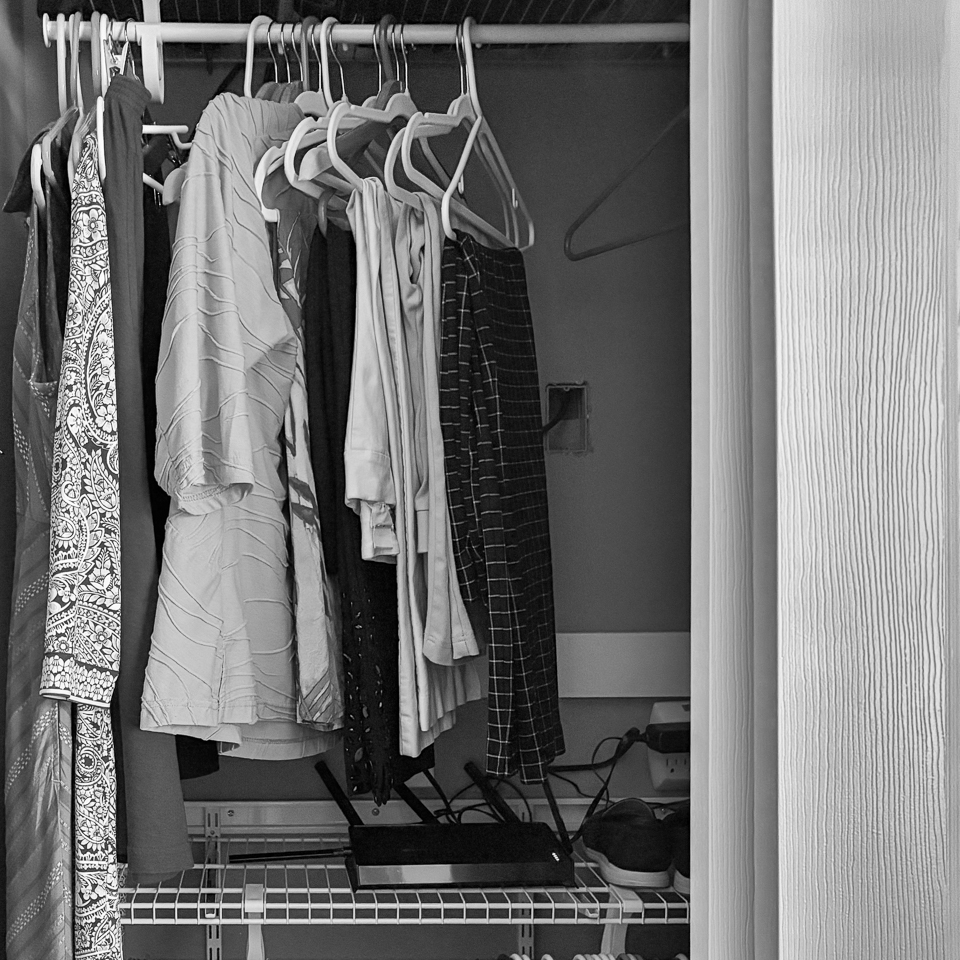
There are two kinds of pain in a closeted life.
The first is the pain you can bury.
The second is the pain you cannot.
For decades, I lived inside the first kind.
I knew how to swallow the ache before it reached the surface, how to hide it under layers of competence and charm, how to outrun it through work or ministry or family responsibilities, how to tuck it neatly behind a smile that made other people feel at ease.
Inside the closet, pain was something I could manage by disappearing into the version of myself that the world accepted.
I became an expert at looking fine.
At presenting strength.
At polishing whatever part of me people wanted to see.
I could feel trembling inside and no one would suspect a thing.
That is the first kind of pain:
the quiet one, the hidden one, the one that presses against your ribs but never quite breaks through the skin.
The one that teaches you to separate your inner life from your outer one so completely that you begin to believe they are two different people.
When I was closeted, that was the trick that kept me alive:
if something hurt too much, I could bury it.
If a longing rose in me, I could silence it.
If grief came, I could swallow it whole before anyone noticed.
Pain could be stored away, hidden under the floorboards of my mind, packed into corners the world never asked to see.
Because the world was in love with my outer story, and as long as that story remained intact, no one would question the rest.
Inside the closet, pain was my private companion.
But it was also optional in the strangest way.
Not optional in the sense that I could avoid being wounded—hiding wounds does not prevent them—but optional in that no one expected me to name the wound aloud.
No one pushed me for honesty.
No one asked me to speak from the place that throbbed.
Pain lived inside me like a secret tenant, paying rent in exhaustion and self-betrayal, but never forcing me into the open.
And for a long time, I believed that was safety.
Then life turned.
Truth rose.
The closet cracked.
And I learned the second kind of pain—the kind that cannot be hidden because the self you once hid is now the self the world sees.
Outside the closet, pain is not an internal negotiation.
It is a lived reality.
The wounds show.
The rejections have faces.
The losses have names.
The grief has no hiding place because the one who feels it is no longer underground.
Outside the closet, there is no inner persona and outer persona.
There is only one life now.
One self.
One story.
And that is its own kind of holy ache.
When people celebrate coming out, they often speak about freedom.
And freedom is real.
It is fierce.
It is oxygen after a lifetime of holding your breath.
But freedom is not gentle.
It does not arrive without cost.
And for every soft gift it gives, there is a sharp edge too.
Because when you live inside the closet, the pain is internal.
But when you live outside the closet, the pain is external.
It comes from stares, from misunderstandings, from losses you never imagined you would endure.
It comes from the courage of living in the open world with a self that can no longer hide behind safety.
Inside the closet, the pain says
This hurts, but I can make it disappear for now.
Outside the closet, the pain says
This hurts, and I must learn to bear it because it is happening in real time, in real spaces, to the real me.
One life lets you hide.
The other asks you to stand.
Neither is easy.
Both require strength.
Both shape you.
But only one of them allows you to be whole.



Leave a Reply