

When I was young, the sport I loved was baseball. Not casually. Not as a pastime. I loved it the way you love something that gives you a place to put your energy, your anger, your hope. The way you love something that asks something of you and gives you just enough back to keep you coming. Baseball was where my body learned discipline and my heart learned patience long before I had words for either.
I remember the feel of the glove before I ever remember the score of a game. Worn leather. Sun-warmed. The way it snapped shut like punctuation—Yes, you’re paying attention now. I remember the weight of the bat resting against my shoulder, the small ache in my hands after practice, the dirt worked into the creases of my palms. The field felt enormous then, stretching wider than my confidence, wider than my certainty. Every fly ball felt like a test. Every at-bat felt like exposure. You stood alone in that box, everyone watching, learning early what it meant to be seen—and judged—by what you did next.
Baseball taught me how to wait. How to listen. How to fail without leaving. You strike out. You miss the catch. You let the team down. And still, you take the field again. You learn that not every swing connects, that effort doesn’t guarantee applause, that sometimes the best thing you can do is stay ready for the next pitch. I didn’t know then how much of life would feel exactly like that.
I loved the small moments as much as the big ones. The quiet before the first pitch. The chatter in the dugout. The way the world narrowed when the ball was in motion. After the game, I’d ride home with dirt on my knees and sweat drying on my neck, replaying moments that no one else would remember but me. Baseball gave me a place to belong before I knew how desperately I needed one.
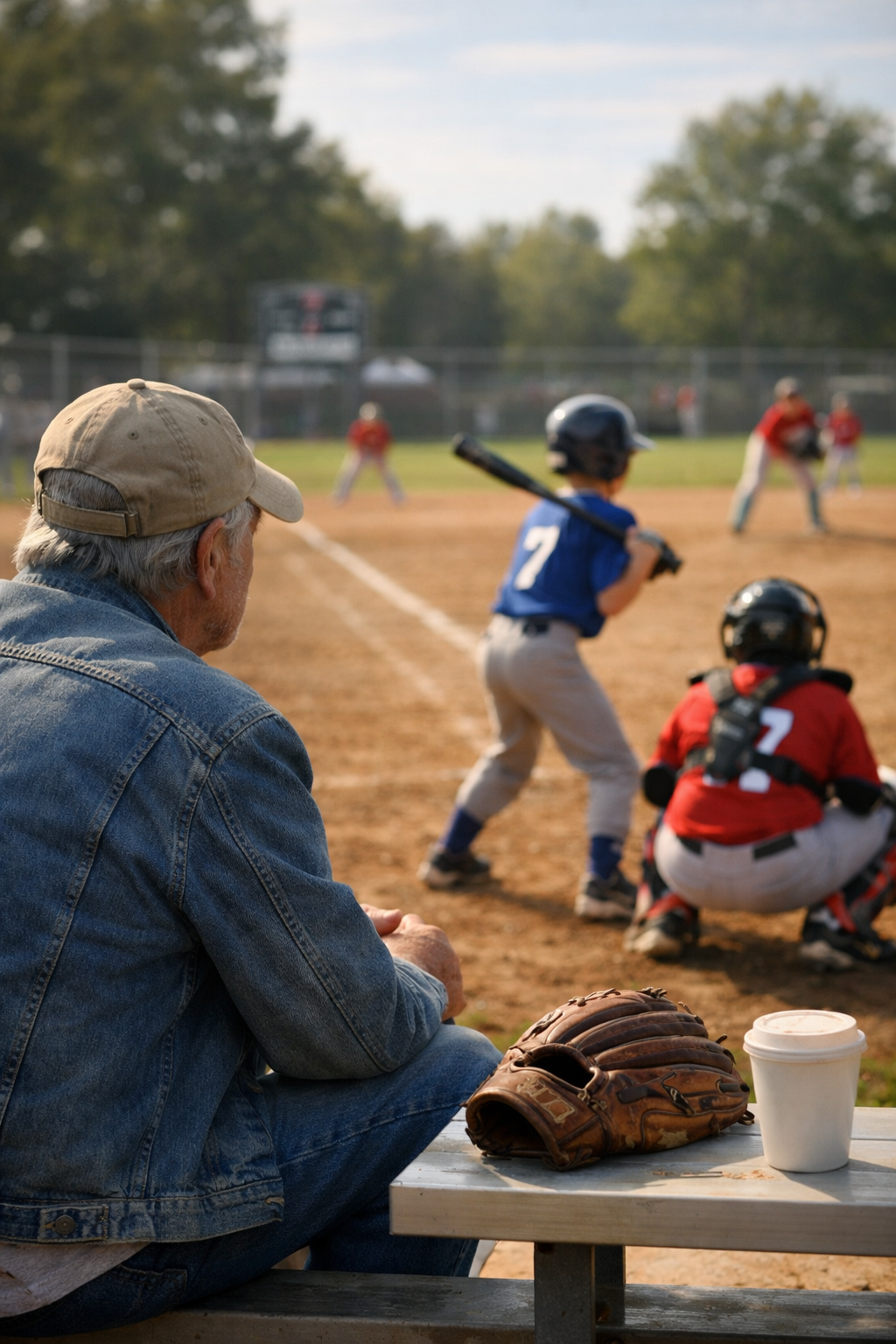
These days, I don’t play anymore. My body has changed. My life has changed. But baseball is still with me—just standing a little farther back now, sitting instead of sprinting, watching instead of swinging. My favorite time in the game is watching my grandson play.
There is something sacred about that shift.
I watch him take the field with a seriousness that makes me smile. His glove is still a little stiff. His cap sits just a bit too low. He runs out to his position like it matters, like this moment counts. And it does. I see how he scans the field, how he listens for instructions, how he adjusts his stance as if he’s already learning that paying attention is half the work.
When he steps up to bat, my chest tightens in that familiar way. He sets his feet. Tugs at his helmet. Looks out toward the pitcher with a mix of focus and hope that takes me right back. When the bat meets the ball—that sound—it lands somewhere deep in me. And when he runs, legs churning, arms pumping, eyes locked on the base, I feel pride rise up without permission. Not because he’s good. Not because he gets a hit. But because he’s there. Because he’s trying. Because he keeps going.
I watch his face when he misses a pitch. The quick flicker of disappointment. The way he breathes it out and resets. I watch how he learns resilience one inning at a time. How he laughs with his teammates. How he stays in the game even when it doesn’t go his way. I recognize that posture. I know that courage.
Sitting in the stands, I realize something quietly holy: this game has been a thread through my life. It held me when I was young and searching. And now it gives me a front-row seat to watching courage be born again in someone I love. Same dirt. Same bases. Same long pauses between action. But the meaning has deepened.
I don’t miss playing the way I thought I would. Watching my grandson play baseball has given the game back to me in a fuller way. It’s no longer about proving myself. It’s about presence. About legacy. About seeing the best parts of your past take root in someone else and grow in their own direction.
Baseball taught me how to stay. Watching my grandson play teaches me how to witness. And honestly, that might be the greater gift.



Leave a Reply