

The older I get, the more time feels like water.
Not the kind that rushes, loud and insistent, but the kind that moves quietly beneath the surface, carrying everything with it whether you’re ready or not. Memory works that way too. It doesn’t ask permission. It just returns you.
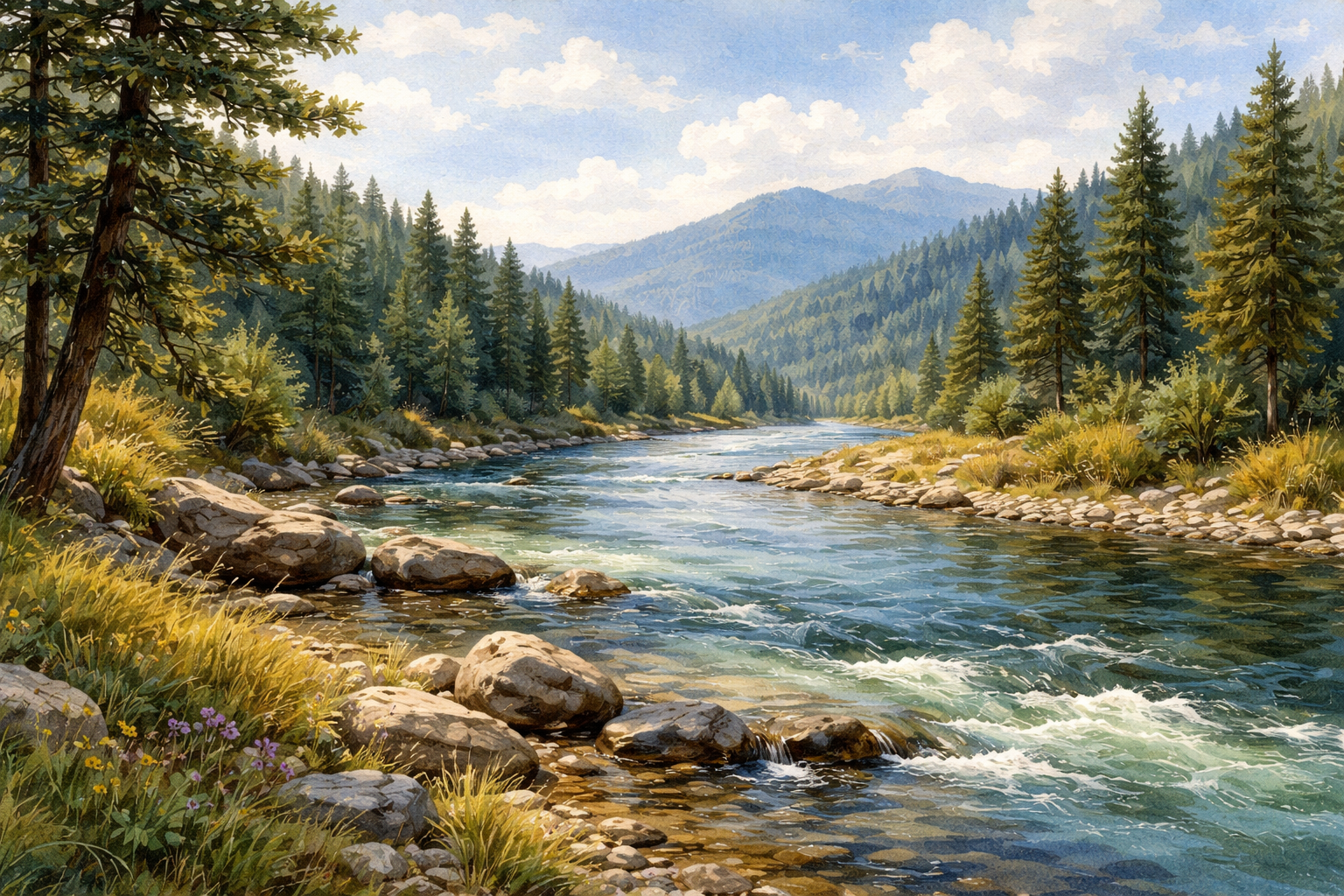
And lately, it keeps taking me back to the Blackfoot River.
I can still feel the early mornings there, the kind where the air held a chill even in summer, and the world seemed to pause just before the sun crested the mountains. We would arrive before the light fully settled, my boots crunching softly over gravel, the river already awake, whispering its endless song.
Back then, time didn’t feel like something I could lose.
I remember the way the water moved—clear and cold, slipping over stones worn smooth by years I couldn’t yet imagine. I would stand at the edge, rod in hand, not because I was good at fishing, but because I believed something might happen if I waited long enough. There was a kind of faith in it. Not the kind I would later preach about, but something quieter. Simpler.
Cast. Wait. Hope.
Sometimes I caught fish. Sometimes I didn’t. It didn’t matter.
What mattered was the stillness.
What mattered was that no one expected anything from me there.
I didn’t have to explain who I was. I didn’t have to carry the weight of becoming. I didn’t have to measure myself against anything or anyone. The river didn’t ask questions. It didn’t demand clarity. It didn’t care if I was certain or lost or somewhere in between.
It just flowed.
There are moments now, in the life I’ve built—full and complicated and hard-won—when I find myself longing for that version of stillness again. Not because I want to undo the years or erase what has shaped me, but because there was something sacred in not yet knowing.
Something holy in being before becoming.
I think about that child standing in the river, line drifting just beneath the surface, watching the current carry everything forward. I want to walk back into that scene, not to change it, but to stand beside that younger self and say, “You don’t have to rush. You don’t have to figure it all out yet. There is no prize for getting there faster.”
But time doesn’t work that way.
It keeps moving, like the Blackfoot, steady and unrelenting.
And yet, sometimes, in quiet moments, I close my eyes and I can almost step back into it. I can hear the water brushing against the banks. I can feel the weight of the rod in my hands, the gentle pull of the current around my legs. I can smell the pine and the damp earth and the faint trace of morning sun warming the surface of the world.
In those moments, I realize something I didn’t understand back then.
I never really left.
That river is still in me.
Its patience. Its rhythm. Its refusal to force what will come in its own time.
Maybe that’s what I’ve been trying to return to—not a place, but a posture. Not a childhood, but a way of being in the world that trusts the current instead of fighting it.
I used to think the goal was to grow up, to move beyond those quiet mornings into something more meaningful, more significant.
But now I’m not so sure.
Maybe meaning was already there, standing ankle-deep in cold water, learning how to wait without fear.
Maybe significance was never about becoming someone else, but about remembering who I was before the world started asking me to explain myself.
If I could go back, I wouldn’t change anything.
I wouldn’t cast differently. I wouldn’t try to catch more fish. I wouldn’t hurry the sun as it rose over the Montana hills.
I would just stay a little longer.
Stand a little deeper in the water.
Listen a little more closely to the way the river speaks without words.
And when it was finally time to leave, I would carry that stillness with me, knowing now what I didn’t know then—
That the river was never just a place.
It was a way home.



Leave a Reply