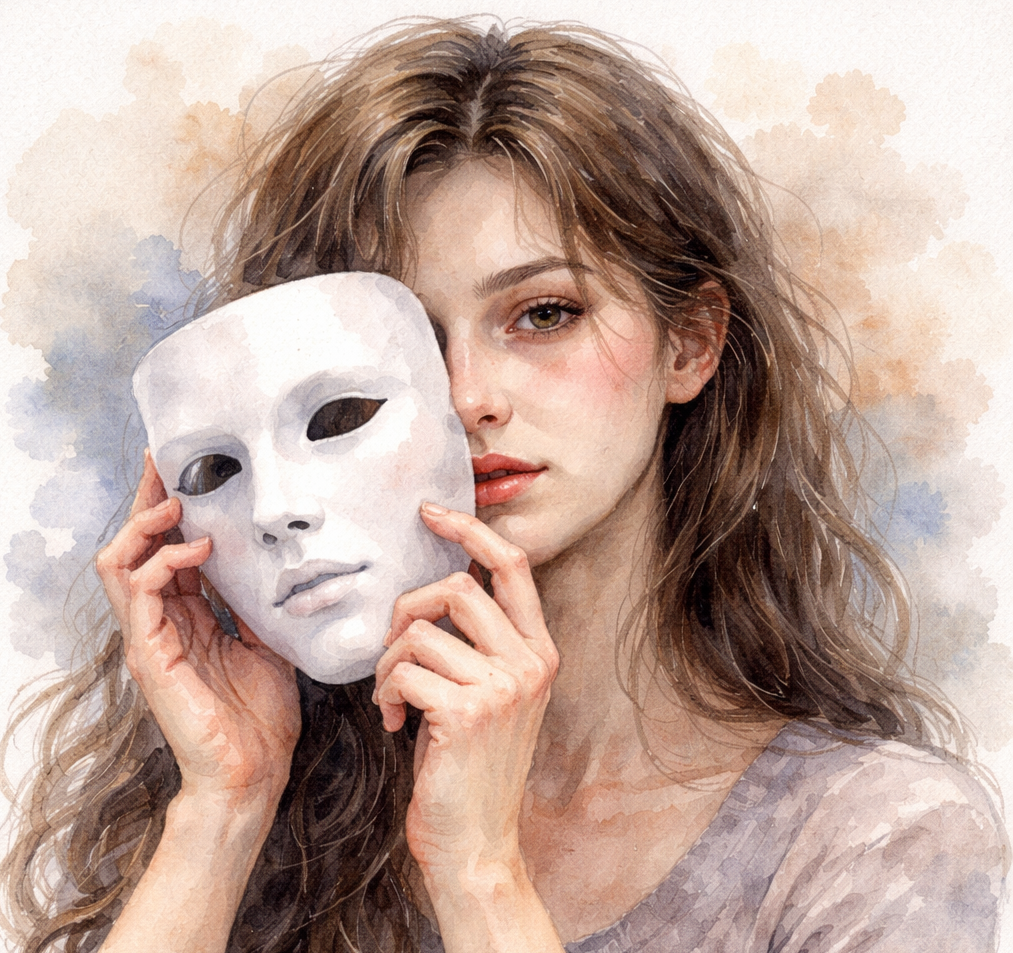


What makes a person unique is not found in a single trait, talent, or story, but in the deeply personal way all of those elements come together over time. Uniqueness is not something we achieve as much as it is something we uncover. It is shaped by experience, refined by struggle, and revealed most clearly when a person chooses authenticity over performance.
At the surface, we might point to obvious differences. Personality, background, culture, gifts, and interests all contribute to how someone stands apart. Two people can live in the same city, attend the same schools, and even share similar roles, yet still experience the world in entirely different ways. Each person carries a distinct lens shaped by their upbringing, relationships, wounds, and hopes. That lens influences how they interpret joy, handle pain, extend compassion, and make meaning out of their lives. No one else sees the world exactly as they do.
But uniqueness runs deeper than external differences. It lives in the internal landscape of a person. It is found in how someone wrestles with doubt, how they respond to failure, how they love, and how they choose to keep going when life becomes difficult. The same event can break one person and transform another. What makes that difference is not the event itself, but the inner world of the person experiencing it. Their resilience, their fears, their beliefs, and their willingness to grow all shape a response that is entirely their own.
This is where authenticity becomes essential. Without authenticity, uniqueness gets buried under expectation. Many people spend years, even decades, trying to become who they believe they are supposed to be. Family, culture, faith communities, and social systems often communicate clear messages about what is acceptable and what is not. Over time, it can become easier to perform than to be. People learn to edit themselves, to soften certain truths, or to hide parts of who they are in order to belong.
But performance creates sameness. Authenticity creates distinction.
When a person begins to live authentically, something shifts. They stop measuring their worth by comparison and begin to honor their own story. They allow their voice to sound like their voice, not an echo of someone else’s expectations. They embrace both their strengths and their imperfections, recognizing that both are part of their identity. Authenticity does not mean having everything figured out. It means being honest about where you are, even when that honesty feels vulnerable.
In that vulnerability, uniqueness becomes visible. A person who has faced loss may carry a depth of empathy that cannot be taught. Someone who has questioned their identity may develop a clarity and courage that others have never needed to find. A person who has rebuilt their life after failure often carries a quiet strength that speaks louder than any success. These qualities are not interchangeable. They are formed through lived experience, and they cannot be replicated.
Relationships also play a role in shaping uniqueness. Every connection leaves an imprint. The people who have loved us, hurt us, challenged us, and stood beside us all contribute to who we become. Even absence shapes us. The conversations we have had and the ones we never got to have both leave their mark. Over time, these interactions weave into a narrative that belongs to no one else.
And yet, perhaps the most defining aspect of uniqueness is the courage to claim it. It is one thing to be inherently unique. It is another to live as though that uniqueness is valuable. The world often rewards conformity because it is predictable and easier to manage. Authentic living, however, requires risk. It asks a person to step outside of approval, to speak truth when silence would be safer, and to exist without apology.
In the end, what makes a person unique is not just what has happened to them, but how they choose to live in response to it. It is the integration of their story, their perspective, their relationships, and their willingness to be real. Authenticity is the thread that ties it all together. Without it, uniqueness remains hidden. With it, a person becomes unmistakably themselves, and that is something no one else can replicate.




Leave a Reply