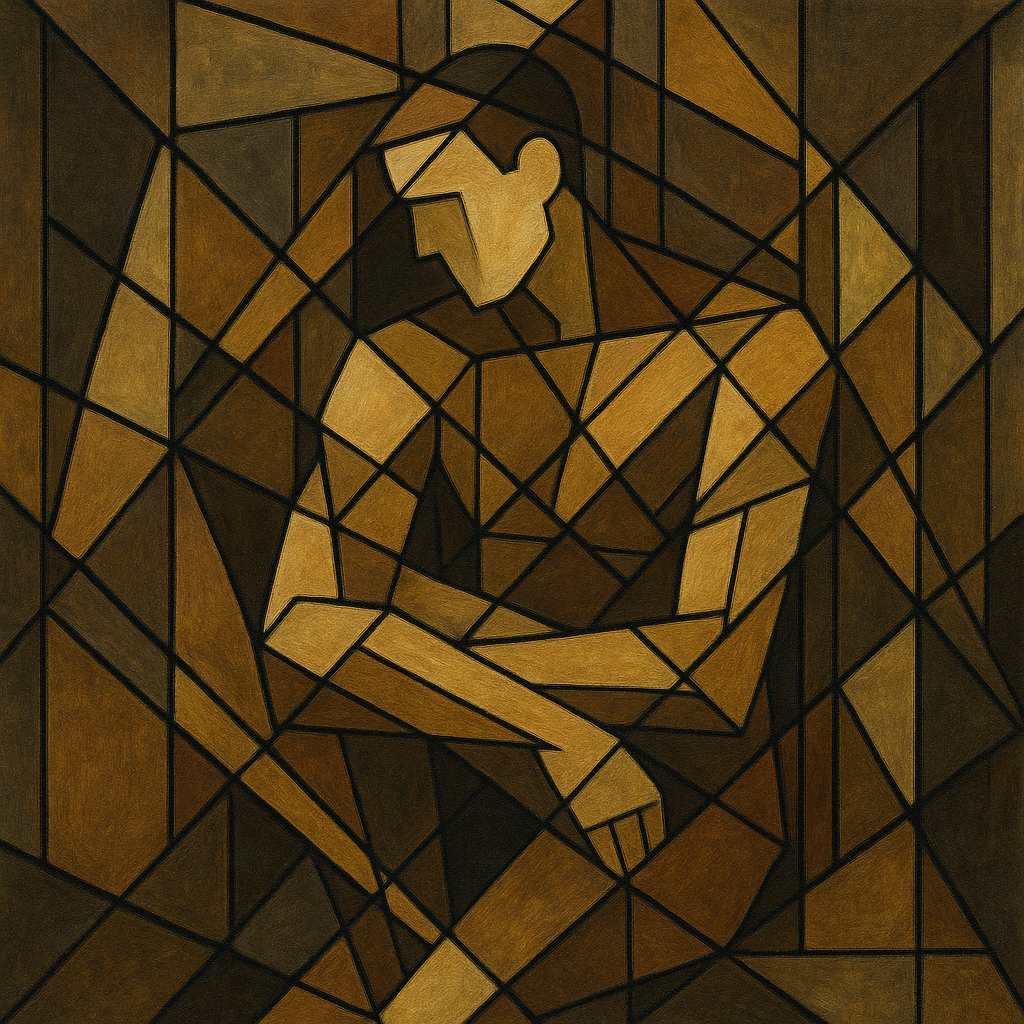
Before I ever spoke my truth, I memorized theirs.
I was born into a world that handed me a script before I could read. The lines were already underlined, the stage already set:
Be strong.
Be successful.
Be normal.
Be straight.
Be a man.
And I—ever the good student—did everything I could to meet them.
There was no room for questions in the house I grew up in. No space for softness, no patience for deviation. My father loved order. My mother prayed for obedience. And I became fluent in both. I learned to keep my voice measured, my eyes forward, my gestures small. I discovered early that approval could be earned, but never without cost.
I learned to wear masks so well that I forgot there was a face underneath.
So I did what was expected. I studied hard. I shook the right hands. I kept my fears hidden and my ambition visible. I earned a degree in finance and stepped into the high-stakes world of investment banking—a world built on certainty, speed, and sharp edges.
There, I found a different kind of language. One made of numbers and power plays, of markets and margins and competition. I knew how to translate myself into something palatable. Professional. Profitable. Male.
I rose through the ranks with precision and grit. I closed deals worth more than most people’s homes. I wore tailored suits and learned how to make small talk over expensive scotch. My office had a view. My business card had a title. My voicemail had authority in it.
On paper, I was everything they told me to become: a provider, a protector, a man of influence.
But behind the performance, I was splitting at the seams.
Every morning, I suited up like I was putting on armor. Not just to survive the business world, but to survive myself. Because somewhere behind all the titles and transactions lived a quiet, unbearable truth: I was not who they thought I was. I was not even who I had tried to become.
There was another voice inside me—one I had spent years silencing. It whispered things that made my heart ache and my stomach turn. It whispered about dresses and softness. About the ache to be seen differently. About a self that had no name in the world I inhabited.
I did not know then that this voice was not my enemy. I only knew that it could ruin me.
So I buried it.
I got married. We had children. We bought a house and decorated it with framed photos and hand-me-down expectations. I coached soccer and led Bible studies and paid bills and said “I love you” like I meant it—which I did, in the ways I could. I was a husband. A father. A man trying so hard to disappear inside the life he built.
And yet, every mirror betrayed me. Every reflection reminded me of the disconnect between what the world saw and who I really was.
I prayed harder. I worked longer. I overachieved in hopes that maybe success could exorcise the truth. If I just got one more promotion, one more accolade, maybe I could finally settle the war inside. Maybe this life I had built would start to feel like mine.
But no matter how loud the applause, I couldn’t outrun the silence that followed.
And the silence was where the grief lived.
Not grief like we talk about at funerals, but the kind of grief that accumulates slowly—quiet as dust on a bookshelf. The grief of vanishing a little more every year. The grief of knowing that the people who love you don’t really know you. The grief of playing a role so well that you forget how to leave the stage.
I didn’t have language for what I was feeling. I had doctrine. I had masculinity. I had shame. I had decades of sermons that told me God made me male and female and nothing in between. I had silence where answers should have been.
And so, I kept going.
I became a pastor. Another suit. Another script. Another space where certainty was rewarded and questions were quietly exiled. It’s not that I was lying—I was just surviving. I loved my congregation. I loved my family. I loved God, even if I wasn’t sure God still loved me. But I was living a life shaped more by expectation than by presence. And it was killing me slowly.
The strange thing is how long you can live that way. How long you can go undetected. People praised me for being steady, faithful, successful. No one asked if I felt free.
Because freedom isn’t the question we ask of those who perform well. We ask if they’re productive. If they’re good. If they’re keeping the peace.
I was keeping the peace. But I was not at peace.
And beneath the surface, I knew: the life I had built wasn’t a sanctuary—it was a prison made of other people’s dreams.
I didn’t set out to deceive anyone. I set out to be loved.
But the love I received was tethered to a version of me that wasn’t real. And after a while, even the love starts to feel like a lie.
It’s easy to envy people who discover who they are at a young age. Who grow into themselves like trees leaning toward the sun. That wasn’t my story. I grew into a shadow. I learned to become who people needed me to be. And in doing so, I lost track of who I was.
Sometimes I wonder how much of that early success was just a desperate attempt to prove I deserved to exist. If I was powerful enough, useful enough, holy enough—maybe no one would see through me. Maybe I wouldn’t have to see through myself.
But the soul, I’ve learned, doesn’t care much for appearances. It keeps calling you back to truth. Sometimes gently. Sometimes like a storm.
For years, I tried to bargain with that voice. I told it to wait. To be quiet. To respect what I had built. But truth is rarely polite. It doesn’t care about your image. It cares about your liberation.
And eventually, I reached the moment I feared most: when the pain of hiding became greater than the fear of being seen.
I wish I could tell you that I came out with confidence. That I declared who I was without hesitation. But the truth is more complicated. I came out trembling. Slowly. In pieces. Not as an act of bravery, but as an act of survival.
And the life I had built? It began to unravel.
That’s what no one tells you about transformation. It doesn’t just reveal who you are—it often requires the dismantling of everything you thought you had to be.
Careers. Friendships. Family. Faith. I didn’t lose them all, but I came close.
Still, when I finally told the truth, I felt something I hadn’t felt in years. Not comfort. Not clarity. But breath. My own breath. In my own body.
And that was enough to begin again.
Love,
Me




Leave a Reply