• Faith, Identity, and the Courage to Lead
    Daily writing prompt
    If there were a biography about you, what would the title be?

    Faith has always been the foundation, the solid ground beneath the feet of any follower of Christ. It carries believers through seasons of certainty and doubt, joy and sorrow, belonging and searching. As a pastor, my calling has been to guide others on their own journeys of faith.  

    For years, I walked in the role of a leader within the church, fulfilling my call to ministry with a heart devoted to service. I have written countless sermons, walked alongside my community in times of crisis, and sought to embody the love of Christ in all that I do. But leadership is not merely about offering guidance to others—it is also about being willing to journey into the unknown, to embrace change, and to stand in the truth of who we are, even when it feels risky.

    My journey of identity has been one of unfolding grace. For much of my life, I built a world conforming to societal expectations, living within definitions that did not fully capture the depth of my being. But the Spirit moves in ways we do not always anticipate, and over time, I began to listen more deeply to the quiet yet persistent truth I had buried deep within me. As I embraced my gender identity, I realized that authenticity and faith were not opposing forces but rather two threads of the same divine.

    Stepping into my true self is not without fear. The church, while a place of love and community, can also be a space of scrutiny and resistance. Would I still be regarded as a faithful leader? Would I still have a seat at the table? These were not merely abstract questions; they echoed the weight of real concerns many in the LGBTQ+ community face within faith spaces. However, I understood that living truthfully was the only way forward. To lead with integrity, I had to trust that the God who called me into ministry also called me to be my authentic self.

    Faith and identity are not separate; they are intertwined, shaping and refining one another. Through this journey, my ministry has deepened in unexpected ways. I now grasp the power of grace more profoundly. I perceive the resilience of the human spirit in a new light. I recognize that courage is not the absence of fear but the choice to move forward in love despite it.

    Leadership, at its core, involves bearing witness—to God’s love, to justice, to truth. I have realized that my role is not only to preach about transformation but to embody it. I aim to demonstrate that faith is not about rigid conformity, but about trusting in the expansive, boundless love of God.

    To be Ava is to be whole, to lead with faith, and to walk with courage into the future, trusting that grace is always in motion.

    After harsh criticisms, I ask myself, “Is it selfish of me to transition now as a husband, a father, and a pastor?”

    That’s such a heavy question, and I ache with a deep love and responsibility for those around me—my spouse, my children, and my congregations. I don’t believe it is possible to be selfish when all you do is be who you are. Living authentically can be one of the most selfless things anyone can do because it allows them to love more fully, to lead with integrity, and to be present in a way that is deeply honest.

    That doesn’t mean it isn’t difficult. Transitions, especially in the context of family and faith leadership, carry weight. People may struggle to understand. But love—real love—is not based on who we were expected to be. It’s based on who we indeed are.

    As a husband and father, I realize my family will have their own journey in this process, and I acknowledge their feelings while also holding space for my own truth. Being present for them while honoring myself isn’t selfish—it’s an act of courage and love. As a pastor, my congregation sees me as an example of faith in action. What more remarkable testimony to the power of faith than stepping forward in trust, believing that God created me beautifully and wonderfully, as I am meant to be?

    I am not abandoning my loved ones or my calling. I am showing them what it means to live with courage. It’s not selfish to seek wholeness. It’s necessary. And I, too, am worthy of that.

  • If I Could Change The World
    Daily writing prompt
    If you had the power to change one law, what would it be and why?

    If I could change one law, it would be to enact comprehensive federal protections for transgender people in every aspect of life—employment, housing, healthcare, public accommodations, and beyond. Right now, too many of my trans siblings, especially trans women of color, face discrimination, violence, and systemic barriers simply for existing.

    I want a law that ensures no doctor can refuse me care, no employer can fire me for being myself, and no landlord can deny me a home because of my identity. A law that affirms my dignity and humanity, not one that forces me to fight for basic rights in court.

    I dream of a law that would protect trans youth from being stripped of gender-affirming care by politicians who don’t even know them. A law that keeps schools safe for kids like I once was—scared, hiding, and hoping to find a place where I belonged.

    If I could change one law, it would be a sweeping declaration that trans people are not a political debate. We are human beings who deserve safety, respect, and the freedom to live authentically without fear.

  • The Moment Everything Changed
    Daily writing prompt
    You get some great, amazingly fantastic news. What’s the first thing you do?

    It began with a phone call. Or perhaps an email. Honestly, I can’t even recall which, because the moment I saw the words—the confirmation, the dream, the prayer finally answered—everything else faded into the background.

    For a few seconds, I just stared. My mind struggled to catch up, to grasp what was right in front of me. And then, it hit me. A wave of emotion crashed over me so suddenly that I gasped, hand flying to my mouth. My breath came fast, my heart pounded, and before I knew it, tears filled my eyes—not sad tears, not even relief, but pure, unfiltered, overwhelming joy.

    The type of joy that makes you throw your head back and laugh like a child.

    The kind of joy that makes your entire body feel weightless.

    The type of joy that inspires movement.

    Without a second thought, I rushed to my speaker and scrolled desperately through my playlist. This moment demanded a soundtrack. It called for Freddie Mercury or Annie Lennox—someone who could unleash a feeling, transforming emotion into something electric. My fingers shook, and then, as if the universe were celebrating with me, the opening chords of “Don’t Stop Me Now” filled the room.

    I screamed—like, at full volume, throwing my hands in the air and letting the neighbors wonder. Then I was dancing, spinning, and laughing so hard that I nearly tripped over my own feet.

    Because whatever this news was—whether it marked a long-awaited milestone in my transition, a breakthrough in my ministry, or a personal victory understood only by God and me—it indicated that something had shifted. A door had opened. A path had cleared. A dream had moved from someday to right now.

    And I had to experience every bit of it.

    After the song ended and I finally caught my breath, I collapsed onto the couch, pressing my hands to my face, still giggling. Aftershocks of joy pulsed through me, little waves of disbelief and excitement. Then, a new thought surfaced: Who do I tell first?

    I had my people—the ones who had prayed with me, dreamed with me, and sat with me through the waiting and the wondering. They were the ones who would hear this news and receive it immediately.

    But before I reached for my phone and typed a single word, I did something else.

    I closed my eyes, took a deep breath, and whispered, “Thank you, God.”

    Because this moment, this joy, this unbelievable, fantastic, heart-soaring news—it wasn’t just about me. It was about the journey, the grace, and the divine timing that brought me here.

    Finally, with my heart racing and my fingers trembling, I sent that first text.

    “You won’t believe this…”

    And just like that, the celebration started.

  • My Heart Hurts
    Daily writing prompt
    Do you need a break? From what?

    There is a type of pain that settles in the heart, not like a sharp wound that bleeds and demands immediate attention, but rather like a deep, slow ache that never truly fades. I have come to know this pain intimately since coming out as transgender. It is the pain of being hated simply for existing as who I am.

    I did not choose this path. Who would choose to be hated? Who would willingly walk a road where love is conditional, where acceptance is withdrawn the moment I reveal the truth about myself? When I was living as the person the world expected me to be, the love I received was abundant. But the moment I spoke my truth, that love from some people turned cold, replaced by whispers, rejection, and even outright hostility.

    My heart aches when people despise me for being transgender, not because I seek their approval, but because I once believed in the goodness of humanity. I grew up trusting in the power of love, believing that faith, kindness, and understanding could overcome any divide. But then I discovered that, for some, their love has limits. Their compassion comes with conditions. Their faith in God—often proclaimed as limitless and unconditional—ends at the boundary of my identity.

    I have been told that my existence is an offense, that my journey is a rebellion against God. I have heard people twist sacred words to justify their cruelty, using scripture as a weapon rather than a balm. It hurts because I know God. I have walked with God for years, experiencing both joy and sorrow, faith and doubt. I have served in ministry, preached the gospel, comforted the grieving, and lifted up the broken. I have seen the face of God in the love and acceptance of those who truly embody Christ’s message. Yet, there are those who look at me and see only something to condemn.

    The irony is that I have not changed in the ways that truly matter. My heart remains the same; I still love deeply. I still aspire to be kind, to serve others, and to make the world a better place. Yet for some, my gender identity overshadows everything else, as if my soul could be overshadowed by the way I dress or the name I carry.

    And so my heart aches. It hurts under the weight of rejection, under the sting of words meant to wound, and under the silence of those who once stood by my side but now turn away. It aches not just for myself but for every transgender person who has felt this same pain, for every child who has been cast out, and for every soul who has been made to feel unworthy of love.

    But despite the pain, my heart still loves. It loves fiercely and stubbornly, even when battered. I refuse to let hatred define me. I refuse to let rejection turn me bitter. If I have learned anything from Christ, it is that love isn’t something given only when it’s easy or convenient. Love is a calling, a commitment, a force that endures even in the face of cruelty.

    So yes, my heart aches when people hate me for being transgender. But my heart also beats with hope. It beats for the love that endures, for the kindness that persists, for the God who walks alongside me, unwavering. And as long as my heart beats, I will continue to love, continue to believe, and continue to be exactly who I was created to be.

  • The Greatest Innovation of My Lifetime
    Daily writing prompt
    The most important invention in your lifetime is…

    If you had asked me years ago what the greatest invention of my lifetime would be, I might have listed a series of remarkable technologies—AI, medical advancements, or even the rise of renewable energy. But as I stand here now, reflecting on the world I’ve watched transform, I realize that the most revolutionary invention isn’t solely about science or technology. It’s about connection.

    The greatest invention of my lifetime has been the digital revolution—not just the internet itself but what it has made possible: the ability to be seen, heard, and understood. It has given people like me, people searching for authenticity and belonging, a way to find our voices and share our truths.

    When I first started writing, the world felt much smaller. Thoughts stayed locked in journals, conversations were limited to the people in our immediate circles, and identity—especially for those of us living outside traditional binaries—felt like a lonely journey. But as technology evolved, so did our ability to connect. Blogging gave way to social media, and suddenly, I wasn’t just writing into the void; I was writing for a community.

    For someone like me, who spent years trying to reconcile faith and identity, technology became more than just a convenience; it was a lifeline. Through online spaces, I discovered others who had walked similar paths, who had wrestled with their place in the world and emerged stronger. In these digital conversations, I found a sense of belonging I had never experienced before.

    Beyond personal connection, this invention—the internet, social media, and digital storytelling—has transformed how we advocate for justice. Movements that once took years to establish can now mobilize in mere hours. Stories that would have been silenced are now amplified across the globe. I’ve witnessed churches, once reluctant to embrace the digital world, fully step into it, using it as a platform for love, inclusion, and transformation.

    On a deeply personal level, technology has given me the space to transition openly, share my journey honestly, and receive love from places I never expected. I’ve seen the power of a single post, a single story, to reach someone in their darkest moment and remind them: You are not alone.

    Some might say the greatest invention is AI, the self-driving car, or the next medical breakthrough. While those things matter deeply, I believe that the most powerful innovation is the one that brings us closer to our humanity. The internet, and all that has sprung from it, has changed the way we live, learn, and see one another.

    This invention has built bridges in a world that often feels divided. In my lifetime, there has been no greater miracle than the simple, radical act of being seen.

  • I Wanna Be Me

    The Cost of Being Me

    For much of my life, I have struggled to build something meaningful—relationships, a career, a reputation, a community. I have dedicated decades to crafting a life that reflects my values, passions, and faith. Yet, as I continue my transition, I find myself grappling with an impossible calculation: the cost of becoming my authentic self compared to the cost of staying hidden behind a mask of expectation.

    There is a steep price to transitioning. It is not just financial—though the cost of medical care, therapy, and legal changes is daunting—it is also social, professional, and spiritual. I risk losing the trust and respect of those who have known me by a different name, another face, and another perceived identity. I risk losing relationships that have shaped my journey thus far, connections built over years of shared experiences. I risk losing my standing in institutions that I have faithfully served, communities where I have ministered, and friendships that have weathered other storms. To transition is to step into the unknown, where love and acceptance are not guaranteed.

    But the cost of not transitioning is far greater. If I choose to stay in the shadows of my true self, I lose something even more precious: my own authenticity. I risk suffocating under the burden of a life that isn’t mine, playing a role that drains my spirit. I risk eroding my faith—not in God, but in myself—by refusing to embrace the person God has created me to be. I risk becoming a stranger to those who love me, because I can’t fully let them in if I’m not fully myself. I risk waking up each day feeling like an imposter in my own skin, bound by fear instead of freed by truth.

    Transitioning is not just about changing outward appearances; it involves aligning my soul with how I present myself to the world. It means living without pretense and being fully present in every space I occupy. It honors the person I have always been, the person I have fought so hard to reveal to the world. To deny myself that truth would be to erase all the courage I have summoned, all the battles I have fought, and all the prayers I have whispered in search of peace.

    So, what is the cost of transitioning? It’s the risk of losing everything I’ve built. But what is the cost of not transitioning? It’s the certainty of losing myself. When faced with that choice, I know I must choose myself. I have spent a lifetime cultivating a life worth living, and I will not abandon myself now. Ava is more than just a name I chose—it’s a truth I have embraced. And that truth is worth everything.

    Liora The Caterpillar That Could Not Cocoon

    In the heart of a vibrant meadow, where the sun painted golden hues on the petals of wildflowers, lived a small caterpillar named Liora. She was unlike the others—not in appearance, as she had the same velvety green stripes and soft, wriggling body, but in the way she felt deep within. She watched her friends grow plump, spinning their cocoons when the time arrived, knowing they would soon emerge as butterflies.

    But when Liora attempted to spin her own cocoon, something inside her faltered. It was neither fear nor doubt; it was an invisible barrier, an unspoken force that seemed to restrain her. Yet, it was not solely her own struggles that impeded her—her fellow caterpillars pleaded with her to remain just as she was.

    “Why would you want to change?” asked Dalen, one of her closest friends. “We love you just the way you are, Liora. We don’t want to lose you.”

    “You’re perfect as a caterpillar,” another chimed in. “If you change, you won’t be one of us anymore.”

    Liora’s heart ached. She loved her friends dearly, but she also knew deep within her soul that she was meant for more. She sought the wisdom of Elder Moth, who had once been a butterfly but had aged into wisdom. “Why can’t I cocoon like the others?” Liora asked, her voice trembling.

    Elder Moth looked at her kindly. “Transformation isn’t just about wrapping yourself in silk, dear child. It’s about believing you’re meant to change. But it’s also about having the courage to follow your own path, even when others don’t understand.”

    Liora pondered for a long time. “My friends love me as I am, but they don’t see who I really am inside. I’m afraid that if I change, I might lose them. Yet, if I don’t change, I risk losing myself.”

    Elder Moth sighed. “That is the burden of growth, Liora. It’s the choice between the comfort of the familiar and the risk of what is destined to be.”

    Days passed, and Liora watched her friends emerge from their cocoons, their wings shimmering in the sunlight. She saw them dance on the breeze that once only rustled leaves beneath them. She wanted to dance, too, but the voices of her friends echoed in her mind, their love holding her back, binding her to the earth.

    One morning, as the first light kissed the meadow, Liora curled up beneath a leaf, silent and still. She knew she would never become the beautiful butterfly she was meant to be. The weight of her unspun cocoon pressed down on her, and she could hardly bear it. The others had told her she was perfect as she was, but she felt empty and incomplete.

    She was neither lost nor forgotten. Yet, she remained trapped—forever a caterpillar crawling in a world where she was meant to fly.

  • My Ideal Day
    Daily writing prompt
    Describe your most ideal day from beginning to end.

    My ideal day begins just before sunrise when the world is still quiet, and the air feels fresh with possibility. I wake up naturally, without an alarm blaring—just the soft glow of dawn filtering through my curtains. I stretch, feeling every muscle awaken, then take a moment to breathe deeply, slowly, and gratefully.

    Slipping into a cozy robe, I pad to the kitchen to make myself a cup of perfectly brewed, rich, and smooth coffee. I take it out to the balcony, where the city hums softly below, and I sit, watching the sky shift from deep indigo to warm gold. This is my sacred moment—just me, my thoughts, and the gentle unfolding of a new day.

    After a shower that feels like a baptism of renewal, I dress in something that makes me feel entirely myself—perhaps something flowing, elegant, yet effortless. I take my time with makeup, not out of necessity but as an act of artistry, creating a face that reflects who I am.

    Breakfast is light yet nourishing, perhaps a warm croissant with jam and another cup of coffee. Then, I head out. I might take a walk along the water, the breeze playfully teasing my hair as I move at my own pace, feeling completely unhurried. Maybe I stop at a bookstore, running my fingers along the spines of stories waiting to be discovered.

    By mid-morning, I’m where I truly thrive—in my element, engaging in meaningful work. Whether I’m preparing a sermon, writing a reflection, or sitting with someone in deep conversation, I feel connected and purposeful. My words flow effortlessly, as if they’ve been waiting for this moment to be spoken.

    Lunch is with a dear friend—the kind of soul who sees me completely—where laughter flows easily, and silences feel comfortable. We linger over something delicious—perhaps a crisp salad with citrus and avocado, or a perfectly made sandwich. The conversation dances between lighthearted joy and depth because that’s how my favorite conversations always unfold.

    The afternoon is a blend of inspiration and creativity. Perhaps I write, getting lost in the rhythm of language. Maybe I visit a museum or listen to live music, allowing art and sound to move through me. Or perhaps I sit in a quiet space, simply being, simply absorbing the world around me.

    As the sun starts to set, I head home, where music fills the air—Freddie Mercury’s voice soars, accompanied by Annie Lennox’s haunting melodies wrapping around me like silk. I dance a little, just for myself, just for the joy of it.

    Dinner is comforting yet refined. It may be shared with a small group of people who feel like family, where conversation flows freely and laughter feels like a second heartbeat.

    As night falls, I change into something soft, curl up with a book or journal, and let my thoughts flow onto the page. I reflect on the beauty of the day, the small moments that made it feel sacred.

    At last, I climb into bed, the sheets cool and inviting, my body relaxed, my heart full. The city hums outside, a lullaby of life continuing on, and I drift into sleep knowing that today was enough—because I was fully present in it.

  • Milestones Shape My Perspective
    Daily writing prompt
    How do significant life events or the passage of time influence your perspective on life?

    There was a time when I believed life followed a straight path—a clear trajectory from childhood to adulthood, from uncertainty to understanding. However, as the years have unfolded, I’ve come to realize that life is not a linear journey but rather a tapestry woven with moments of change, challenge, and revelation. Each significant life event and milestone has reshaped my perspective, deepening my understanding of myself, my faith, and the world around me.

    Reflecting on the past, I can see how time has guided me through transformative seasons—some expected and others surprising. A significant shift in my life has been my journey toward understanding my gender identity. For years, I struggled with a truth within me that I couldn’t yet articulate. The world insisted I was one thing, but my spirit revealed a different reality. Accepting my genderqueer identity and embracing my transition became more than just a personal awakening; it turned into a spiritual revelation. This experience taught me that authenticity should not be feared but celebrated with courage and grace.

    Time has also shown me that faith is not static. When I first answered the call to ministry, I saw my role as one of guidance—helping others navigate their faith journeys. Yet, as the years have passed, I’ve come to realize that I, too, am continually shaped by God’s presence in my life. My faith has evolved, not in its foundation, but in how it is expressed. The questions I once feared are now invitations to deeper understanding. The challenges that used to unsettle me have transformed into opportunities for grace.

    Significant life events have also reshaped my relationship with the community. When I first entered my role as a pastor, I believed it was to offer strength and certainty. However, life has shown me that true leadership is found in vulnerability. Through experiences of grief, celebration, and transition, I have come to realize that faith communities flourish not because of one person’s certainty, but due to the collective love, support, and shared humanity among them.

    Music has been a constant companion on this journey of time and transformation. Heartfelt lyrics and powerful, authentic voices remind me that expression—whether through music, faith, or identity—represents one of the greatest gifts we can offer the world. Like echoes from different chapters of my life, these powerful voices encourage me to live boldly and unapologetically.

    As I reflect on all that has changed—the ways I have grown and the lessons I have learned—I find comfort in knowing that time is not my enemy but my teacher. The passage of time does not diminish who I am; rather, it reveals me more completely. While the future remains unwritten, I move forward with faith, knowing that every new experience and every shift in perspective will continue to shape me into the person I am meant to be.

    Life is not about reaching a final destination; it’s about embracing the journey, one moment at a time.

  • The Truth About Transgender People

    In today’s political climate, transgender people are facing renewed fear and uncertainty. The current administration, particularly the president, has actively devalued transgender lives through harmful policies, restrictive laws, and dehumanizing rhetoric. Rather than ensuring equal protection under the law, the government has targeted transgender individuals by rolling back rights, banning healthcare access, and limiting our ability to live freely in society.

    For many of us, this has fostered an atmosphere of fear, where we constantly worry about our safety, our legal protections, and our very humanity. Policies that restrict gender-affirming healthcare, prevent us from serving in the military, or deny our rights to use public facilities are not merely political issues—they are direct attacks on our ability to live as our authentic selves. The administration’s rhetoric encourages discrimination, making it more difficult for transgender people to find acceptance, employment, and security in their everyday lives.

    Transgender people have existed throughout history, across cultures, and in every society. Yet, despite their long-standing presence, myths and misconceptions continue to persist, often leading to discrimination, fear, and misunderstanding. Among the most harmful of these myths is the belief that transgender individuals are somehow unnatural or that they pose a threat to society. The reality, however, is quite the opposite: transgender people, including myself, Ava, are born this way, and we simply seek to live our lives with dignity, authenticity, and the same rights as anyone else.

    One of the most enduring myths about transgender individuals is that their identity is a choice or a product of social influence. Both scientific research and personal testimonies refute this claim. Studies show that gender identity is deeply rooted in biology, influenced by prenatal hormone exposure, genetics, and neurological development. As a transgender woman, I didn’t just wake up one day and decide to change my gender; instead, I gradually came to understand and embrace my authentic self over time.

    From a young age, I felt a profound awareness that my assigned gender at birth did not match my true identity. This realization caused inner conflict, especially in a society where strict gender norms dictate expectations. My journey toward self-acceptance has been long and challenging, shaped by societal pressures, family dynamics, and personal struggles. Yet, through it all, my identity has remained consistent—because it is who I am at my core.

    Another harmful myth is the belief that transgender individuals, especially transgender women, are a threat to society, particularly in public spaces like restrooms. This misconception has driven discriminatory policies and fearmongering campaigns, yet there is no credible evidence to back it up. In fact, numerous studies indicate that transgender people are far more likely to be victims of violence and harassment than the ones perpetrating it.

    The argument that allowing transgender individuals like me to use restrooms that align with our gender identity threatens others is rooted in fear rather than fact. Law enforcement data and academic research show no increase in public safety risks in places that protect transgender rights. Instead, the real issue is the discrimination and violence transgender people encounter when denied access to appropriate facilities. Forcing us into spaces where we feel unsafe or uncomfortable only worsens our vulnerability.

    Transgender identities are not a modern phenomenon; they have existed across cultures for centuries. Many Indigenous societies recognized and respected gender-diverse individuals long before Western colonialism imposed binary gender norms. The Two-Spirit tradition among various Native American tribes, the hijras of South Asia, and the fa’afafine of Samoa are just a few examples of how different societies have acknowledged gender diversity for a long time.

    The myth that being transgender is a recent trend or merely a product of Western liberalism overlooks this rich history. It also dismisses the numerous ways in which transgender individuals, including myself, have contributed to society. Whether in art, science, activism, or community leadership, transgender people have played and continue to play vital roles in shaping culture and driving progress.

    Transgender individuals are not anomalies or threats; we are family members, friends, colleagues, and neighbors. Like anyone else, we seek love, community, and purpose. The idea that we undermine social stability is unfounded; if anything, our struggle for equality highlights the resilience of the human spirit and the universal desire for authenticity.

    Understanding and acceptance are the first steps toward dismantling harmful myths. By listening to transgender voices, educating ourselves, and advocating for equal rights, we can create a society where everyone is valued for who they truly are. The truth is clear: transgender people, like me, Ava, are born this way, and we belong in the world just as much as anyone else.

  • The Weight of Silence

    Hello darkness, my old friend
    I’ve come to talk with you again
    Because a vision softly creeping
    Left its seeds while I was sleeping
    And the vision that was planted in my brain
    Still remains
    Within the sound of silence
    – Sound of Silence by Simon and Garfunkel

    As I prepared dinner tonight, I listened to a special version of Simon and Garfunkel’s Sound of Silence. It was a tribute by a band called Disturbed. Listen to it, and you’ll understand how reflective this song became to me. Search for it on YouTube, and I promise you’ll be blown away.

    I lived in two worlds, carefully stitched together by the thread of secrecy. One world was the one they see—the version of me that fits neatly into expectations and doesn’t raise eyebrows or set off alarms. The other world was real, where I breathed in quiet spaces, in stolen moments, in the rare sanctuary of those who truly understood. I walked a tightrope between these two worlds, balancing survival and self, knowing that one misstep could unravel everything.

    It’s not that I didn’t want to be seen. I did. Desperately. But the cost of visibility was too high. I’ve watched others pay it—observed as they were shamed, cast out, labeled deviant or misguided, and sometimes even dangerous. I’ve heard the whispers about people like me and felt the sharp edges of disapproval in conversations where those speaking had no idea they were condemning someone beside them. The message was clear: if I were known, I would be diminished in their eyes, perhaps even discarded altogether.

    So, I chose secrecy. Not because I wanted to but because I had to. It was a kind of armor, a shield that allowed me to move through the world unscathed—or at least, less wounded than I might otherwise have been. Secrecy kept me employed. It kept me welcome at family gatherings. It allowed me to exist without constant confrontation, without having to justify my existence to those who refuse to understand.

    But secrecy is not without its cost. It is a slow erosion, a gradual hollowing out of the soul. I feel a little less whole whenever I hold my tongue and let a false assumption stand unchallenged. There is a loneliness in being unseen, in knowing that the version of myself most people know is a shadow, a carefully curated illusion. I longed for the day when I could lay down the mask and speak my truth without fear of what it would cost me.

    Yet, despite the weight of secrecy, it also had a quiet strength. There is power in knowing who I am, even if I cannot always proclaim it. There is resilience in navigating a world that demands conformity while keeping my essence intact. And there is hope—hope that someday, the world will be kinder, that the need for secrecy will fade, and that authenticity will no longer be something to be feared.

    I walked this path as carefully as possible, balancing the need for safety with the longing to be free. I yearned for spaces where I could be genuine, even if they were few and far between. Looking back, I realize that I was not alone. Others must have been walking this same road, carrying their secrets, waiting for the day when the world would be ready to meet us as we are.

    I held onto my truth, even in silence. Because even if it is unspoken, it is still mine.

    But seriously, how does a person erase themselves to satisfy the world’s discomfort? How can one look in the mirror, see their truth staring back at them, and then spend their days pretending it isn’t there? What does it do to the soul to be told, over and over, that who you are is wrong—not because of any harm you have caused, but simply because you exist?

    I often ask myself these questions as I lay awake at night. Other times, sitting by my pool, staring up at the stars, I wonder how those stars might have reflected on me differently had I not chosen silence.

    Is it possible to breathe freely while holding your breath? To live fully while shrinking into the shadows? Can a person truly be whole when they must carve away parts of themselves just to be accepted?

    And what does it say about a society that silently demands this erasure? What does it say about a world that forces people to choose between authenticity and safety? Between truth and belonging? Between being seen and being loved?

    At what point does the weight of secrecy become too heavy to carry? When does survival at the cost of self become too high a price to pay? And most of all, why should anyone have to make that choice in the first place?

    How does a person erase themselves to satisfy the world’s discomfort? How can one look in the mirror, see their truth staring back at them, and then spend their days pretending it isn’t there?

    These questions have haunted me for as long as I can remember. They are not abstract philosophical musings but the beating heart of my lived experience. From childhood, I learned that being myself—truly, fully myself—was dangerous and shameful. I knew this from the offhand comments of adults, the jokes made at the expense of people like me, and how society policed bodies, behaviors, and identities. I learned that safety meant silence.

    So, I became an expert in silence.

    I lived a young life of careful omissions and strategic half-truths for years. I wasn’t just hiding from the world—I was managing perceptions, curating a version of myself that would be palatable to those around me. I laughed when I was supposed to. I played the role expected of me. I learned which words to avoid, which gestures to suppress, and which parts of me to keep locked away.

    And in doing so, I lost myself.

    How does someone truly live when they must carve away pieces of themselves to exist? I must have thought I could get by this way; I thought I could make it work. But as I grew older, I recognized that the cost of hiding was steep. 

    Coming out of the closet a few years ago has helped me realize that there was a slow erosion of joy and exhaustion that came not from work or responsibility but from the constant effort of maintaining a mask. I have sensed a return of this joy, and my spirit has found a sense of peace I didn’t know I had available. I wasn’t just hiding who I was—I was negating myself, erasing myself, all to avoid shame. Screw shame.

    But the thing about living inauthentically is that it doesn’t just make life more complicated; it makes it smaller. My world shrank to what was acceptable, and my relationships were shallow because I could never let anyone in too deep. And I was lonely—not because I didn’t have people around me, but because they didn’t know me.

    For a long time, I convinced myself that survival meant secrecy. 

    How long can someone hold their breath before they suffocate? I think it’s a fair question when I think of how I suffocated my psyche for decades.

    So, I finally made a choice. A terrifying, liberating, life-altering choice.

    I chose me.

    Choosing to embrace who I am didn’t mean the fear disappeared, nor did it mean the shame imposed by society magically vanished. However, it did mean I stopped allowing those feelings to dictate my life.

    At first, stepping into authenticity felt like standing on the edge of a cliff, staring into the unknown. I vividly imagined what would happen to everyone I cared about. What if I lost everything? What if the people I loved turned away from me? What if the world I had built came crashing down? These were real fears, and they still exist today.

    But what if I finally felt free?

    What if, instead of losing everything, I gained something I had never truly had before—myself?

    The first steps were small. I let myself explore, even in secret. I allowed myself to imagine a life where I wasn’t pretending. I sought out stories of others who had walked this path before me, clinging to their courage when I couldn’t find my own.

    And then, little by little, I started to speak my truth.

    First in whispers, then in conversations. First to those I knew would understand, then to those I feared might not. Each time, the weight on my chest grew lighter. Each time, I reclaimed a piece of myself.

    Of course, living authentically didn’t come without consequences. Some people did turn away. Some looked at me with pity, others with disdain. I lost relationships I had thought were unshakable. I encountered ignorance, cruelty, and the ever-present weight of societal judgment. I still encounter this same cruelty today.

    But I also gained something I never had before: a real, unwavering connection. When I stopped performing, I found people who loved me, not the mask I had been wearing. I found a community of people who had walked this road, who knew the struggle, who offered me something I had never known before—belonging without conditions.

    And most importantly, I found peace.

    For the first time in my life, I could breathe without restriction. I could look in the mirror and see me. Not a disguise, not an expectation, not a compromise. Just me.

    The world is still not always kind. It’s foolish to imagine it could be, I guess. I still feel the sting of judgment, the weight of shame that lingers in the corners of society. There are still moments when fear creeps in, and I wonder if it would have been easier to keep hiding.

    But then I remember how much I lost when I wasn’t living as the person God made me to be. The loneliness, the exhaustion, the way life felt like something I was enduring rather than experiencing, and all the awful feelings they brought help me today with the idea that no matter how difficult this path may be, it is mine.

    And for the first time, that is enough. I’m okay with it. I like me.

    I have found joy in authenticity, in friendships built on truth, in moments when I no longer have to edit myself, and in the simple, profound relief of existing without apology.

    I am still learning. Still growing. Still healing from years of secrecy. But I am no longer erasing myself and no longer choosing safety over truth.

    Through it all, I have learned that the greatest danger was never being seen. The real me was at risk of disappearing altogether.

    And I refuse to disappear.

  • What Annoys Me the Most
    Daily writing prompt
    What do you complain about the most?

    I like to think of myself as a patient person, someone who sees the bigger picture and embraces grace in all things. But let’s be honest—there are some things that get under my skin, and sometimes, I just need to vent. If I had to pinpoint what I complain about the most, I’d say it boils down to a few key themes: people who refuse to evolve, unnecessary bureaucracy, and the ways the world still clings to outdated ideas that hurt people like me.

    First and foremost, I get frustrated with people who resist growth. I’ve spent my life evolving—spiritually, intellectually, and now, even in terms of gender identity. I’ve come to understand that life is about transformation, about being open to the work of the Spirit and the lessons that unfold as we move forward. But not everyone shares that perspective. Too often, I encounter people who hold onto their biases, who refuse to expand their worldview, and who act as if learning something new threatens their very existence. Whether it’s theological rigidity, social conservatism, or just plain stubbornness, I find myself sighing (sometimes loudly) at people who act like the world should always be the way it was decades ago. Growth is a gift, and I wish more people would embrace it instead of fighting it tooth and nail.

    Then, there’s bureaucracy. Oh, how I loathe bureaucracy. Whether it’s church governance, city permits, or denominational red tape, nothing drains my energy more than needless paperwork and endless meetings where nothing actually gets done. I understand the need for structure—after all, I’m Presbyterian, and we’re known for our love of decency and order. But when systems become more about maintaining power and less about serving people, I start to lose my patience. It’s frustrating when good ideas get bogged down in procedural nonsense, especially when real change is needed. I complain about this a lot because I want to see institutions, especially the church, move with more agility and less fear. I believe in doing things right, but I also believe in doing things now.

    Of course, I’d be lying if I said I didn’t complain about the ways the world still marginalizes people like me. As a genderqueer person in ministry, I live at the intersection of faith and identity, which means I regularly face both subtle and blatant forms of discrimination. Whether it’s the assumptions people make about me, the microaggressions I endure, or the institutional barriers that still exist, there are plenty of days when I just need to let out a long, exhausted groan. I know change is happening, but sometimes, it feels painfully slow. And honestly? It’s tiring having to explain myself over and over again to people who refuse to listen the first time.

    Despite all this, I try not to let my complaints consume me. I know that frustration, when channeled correctly, can lead to action. And if there’s one thing I know about myself, it’s that I’m not afraid to push for change. But some days, I just need to vent.

  • If I Won the Lottery
    Daily writing prompt
    What would you do if you won the lottery?

    If I won the lottery, the possibilities would seem endless. I’d start by indulging in one of my greatest passions: photography. I imagine strolling into a high-end camera shop, knowing I could choose whatever I desired. Canon’s latest state-of-the-art cameras, with their sleek designs and impeccable functionality, would be mine to explore. I’d build a collection of shiny new lenses, the kind that can capture every intricate detail—from the soft blush of a flower petal to the vast, untamed beauty of a sunset.

    The joy of creating would be heightened with these tools. I’d capture images of people, places, and moments that express life’s beauty and its struggles. I’d produce art that embodies authenticity, the kind that narrates a story in every frame. Perhaps I’d even establish a photography studio to guide others on how to use their lens not only to see the world but also to feel it.

    But as tempting as it might be to spend endlessly on gadgets, gear, and luxury, I know I’d soon crave something deeper. The idea of buying peace might cross my mind. After all, isn’t that what everyone dreams of when they fantasize about wealth—the notion that money will solve all problems and soothe all struggles? I might believe that with the right house, the perfect vacation, or even philanthropy, I could finally quiet the restless ache within me.

    Yet deep down, I already understand the truth: peace, love, joy, and hope cannot be bought. They cannot be wrapped in dollar signs or constructed into mansions. These treasures are given freely in Jesus Christ. Winning the lottery would only reaffirm that material possessions, no matter how dazzling, will always fall short of the soul’s deepest needs. Peace isn’t found in things but in surrendering to God’s love. Joy doesn’t depend on circumstances but flows from knowing who I am in Christ. Hope isn’t something we earn; it is a gift of grace.

    Keeping that in mind, I would dedicate my time to meaningful endeavors that extend beyond my personal interests. I’d invest in communities, particularly those that have been neglected and marginalized. Perhaps I’d establish scholarships for LGBTQ+ youth or initiate programs to assist individuals grappling with their identity in finding not only acceptance but also purpose. I’d donate generously to causes that offer housing for the homeless, healthcare for the underserved, and opportunities for those who have been marginalized in society.

    I would also use my photography as a tool for good. Imagine using those Canon cameras to document stories of resilience and hope. I could visit shelters, refugee camps, or rural schools, capturing the faces of people whose lives are filled with dignity and worth. Then, I would share their stories with the world, inspiring others to see beyond stereotypes and divisions.

    Ultimately, winning the lottery would give me the resources to align my actions more fully with my faith and calling. It would remind me that while money can enhance life, it is love—freely given and freely shared—that transforms it. And that is a truth no amount of wealth can ever change.

  • Fear’s Shadow, Loves Light

    I walked through years beneath a shroud,
    Hiding truths, I dared not say aloud.
    A mask of safety, a borrowed disguise,
    Shielding my soul from piercing eyes.

    The world seemed cruel, its judgment sharp,
    Each whisper felt like a cutting harp.
    I danced to tunes not meant for me,
    A caged bird dreaming of being free.

    I feared the loss, the pain, the sting,
    Of loving myself and the change it would bring.
    Would I stand alone, a fragile spark?
    Would Trump’s world snuff me out, leaving me in the dark?

    But fear, though loud, will one day fade,
    Replaced by a strength that love had made.
    Each step I took, though trembling, true,
    Unveiled a horizon of brighter hues.

    No longer bound by shame’s cruel chain,
    I learned that joy could follow pain.
    Authenticity—a tender seed—
    Takes root in courage and meets the need.

    Yes, fear still lingers, its shadow near,
    But, I pray, love outshines it, year by year.
    For living my truth, I’ve found my voice,
    And with it, freedom and the power of choice.

    So to those who hide in fear’s embrace,
    Know that your truth is a holy place.
    The world may stumble, it may not see,
    But your light is holy; let it be free.

  • Fear in the Land of the Free

    As a transgender individual living under President Donald Trump’s administration in 2025, I find myself engulfed in a profound sense of anxiety and uncertainty. The recent executive orders and policy shifts have not only threatened my rights but have also cast a shadow over my daily existence.

    One of the most alarming developments is the executive order defining sex strictly as male or female, based on biological attributes assigned at birth. This policy effectively erases the recognition of transgender and non-binary identities within federal documents and programs. The mandate to remove gender-neutral options from passports and other identification documents forces me to carry identification that does not reflect my true self, leading to potential challenges and discrimination in routine activities. 

    New York Post

    The reinstatement of the ban on transgender individuals serving in the military is another blow to our community. This policy not only bars us from serving our country but also sends a message that our contributions are undervalued. For those who have built their lives and careers within the military, this abrupt exclusion disrupts their livelihoods and sense of purpose. 

    New York Post

    Moreover, the elimination of Diversity, Equity, and Inclusion (DEI) programs within the military and other federal institutions exacerbates feelings of isolation. These programs provided essential support and fostered understanding among diverse groups. Their removal not only diminishes the progress made toward inclusivity but also legitimizes prejudice, making it increasingly challenging to find acceptance and safety within these spaces. 

    reuters.com

    The broader societal implications of these policies are equally distressing. Reports indicate a surge in hate attacks and discrimination against transgender individuals, fueled by the administration’s stance. This hostile environment forces many of us to consider relocating to more accepting regions, uprooting our lives in search of basic safety and dignity. 

    WIRED

    The psychological toll of these developments is profound. The constant fear of losing access to necessary medical care, the anxiety over potential discrimination in everyday interactions, and the overarching dread of erasure by governmental policies contribute to a pervasive sense of vulnerability. Mental health support systems are strained as more individuals seek assistance to cope with the escalating pressures. 

    Them

    In this climate, the importance of community solidarity and advocacy cannot be overstated. Organizations dedicated to LGBTQ+ rights are mobilizing to challenge these policies through legal avenues and public awareness campaigns. However, the path forward is fraught with challenges, and the outcomes remain uncertain.

    Living as a transgender person during this time means navigating a landscape where my identity is not only questioned but actively legislated against. The erosion of protections and recognition instills a daily reality of apprehension, compelling me to remain vigilant and resilient in the face of adversity.

  • Reading an Authentic Tale
    Daily writing prompt
    What books do you want to read?

    As someone who has walked with the Lord for three decades, navigated profound personal transitions, and treasures music as a form of emotional expression, I am drawn to stories that explore identity, transformation, and resilience. Recently, I found myself captivated by the prospect of reading “Untamed” by Glennon Doyle, a book that feels tailor-made for someone like me—a genderqueer pastor in the Presbyterian Church (USA), seeking to embrace my authentic self in every aspect of life.

    In Untamed, Doyle chronicles her journey of breaking free from societal expectations to lead a life of authenticity and love. The book intertwines her personal experiences with reflections on faith, relationships, and identity. Her honesty in questioning long-held beliefs resonates deeply with me, as I’ve spent years balancing traditional structures and my evolving understanding of who God calls me to be.

    Doyle’s metaphor of the “caged cheetah” resonates deeply with me. The cheetah, trained to move within the confines of its enclosure, powerfully symbolizes how we often suppress our true selves to conform to the roles expected of us by others. I have also felt the weight of those societal and institutional cages. The church has been my home and calling for decades; however, navigating it as someone who is both deeply committed to my faith and authentically living as a genderqueer individual has required a delicate balance. Doyle’s words remind me that I am not alone in this struggle and that breaking free—though messy and uncertain—is the path to spiritual and emotional liberation.

    What I particularly admire about Doyle’s writing is how she weaves her spirituality into her narrative. Her relationship with God evolves in ways that challenge traditional notions of faith, yet it remains deeply rooted in love and grace. This reflects my own journey as a pastor. My sermons and writing have long aimed to affirm that God’s love is boundless and that each of us is fearfully and wonderfully made. Reading Doyle’s unapologetic embrace of her spiritual growth feels like discovering a kindred spirit who understands the beautiful complexity of faith.

    Beyond its spiritual resonance, *Untamed* also speaks to my love of music and creative expression. Doyle’s poetic prose flows like a melody, with each chapter serving as a lyric in a song about courage and freedom. Just as Elton John and Annie Lennox invest their souls into their music, Doyle pours her heart onto the page, crafting something raw and transformative.

    Ultimately, *Untamed* is more than just a book—it’s an invitation to live boldly and unapologetically. It serves as a reminder that breaking free from our cages isn’t just an act of rebellion; it’s a form of worship. For someone like me, who aims to lead others in faith while embracing the fullness of my own identity, this book feels like a sacred text, urging me to step into the wild and trust that God walks with me, no matter how untamed the path may seem.

    Anyway, I want to read books like that.

  • Five Things That Bring Joy
    Daily writing prompt
    List five things you do for fun.

    When life gets busy and full of responsibilities, it’s easy to overlook the importance of making time for fun. However, over the years, I’ve learned that taking time for the activities I enjoy not only brings me joy but also recharges my energy for everything else. Therefore, I’m sharing five activities that I love to engage in for fun, each adding its own unique flavor of delight to my life.

    First on my list is singing. Music has always been the language of my soul, and when I sing, I feel completely alive. Whether I’m belting out a classic Queen anthem or losing myself in an Annie Lennox ballad, singing is my ultimate expression of freedom. I’ll admit, I’ve been caught more than once singing at full volume in the car with the windows down, much to the amusement of other drivers. There’s something magical about hitting that perfect note, about feeling the vibrations of my voice resonate with the music. It’s cathartic, almost spiritual, and it reminds me that joy often lies in simply letting go.

    Second, I genuinely love learning how to cook. There’s something so grounding about measuring ingredients, mixing them, and watching as the heat transforms them into something delicious. I love it when my kitchen is filled with the aroma of a new creation, and sharing these creations with friends and family is one of my favorite parts. It’s not just about the final product; it’s the whole process. Chopping, preparing the meal, and cleaning up afterward gives me a sense of accomplishment.

    Another thing I enjoy for fun is writing. Writing has been part of my life for as long as I can remember, and it’s one of the ways I process the world around me. Whether I’m crafting a sermon, penning a blog post, or working on a piece of fiction, I find writing to be both relaxing and invigorating. It’s a space where I can explore ideas, express emotions, and tell stories. Sometimes, I write just for myself—pages that no one else will ever see—and other times, I share my words with others. Either way, writing is my sanctuary, a place where I can lose myself in the flow of thoughts and creativity.

    The fourth activity I truly enjoy is exploring nature. Living in South Florida, I’m fortunate to be surrounded by breathtaking natural beauty. Whether it’s a walk along the beach watching the waves kiss the shore, or a hike in one of the area’s lush parks, being outdoors rejuvenates my spirit. I find peace in the rhythm of nature, the sound of the wind through the trees, and the feel of sand beneath my feet. Sometimes, I’ll take a book with me and read under a tree, letting the natural light and gentle sounds create the perfect backdrop for my escape into another world.

    Last but certainly not least, photography has always been one of my greatest loves. There’s something about capturing a moment in time and preserving it forever that fills me with a sense of wonder and purpose. When I’m behind the lens of a camera, the world around me transforms. Everyday sights become extraordinary, and fleeting moments take on a new sense of permanence. For me, photography isn’t just a hobby; it’s a way of seeing the world—a way of finding beauty in the ordinary.

    One of the things I cherish most about photography is how it connects me to my surroundings. Living in South Florida, I’m fortunate to be surrounded by stunning scenery. The vibrant colors of the city, the endless blue of the ocean, and the lush greenery of the parks all provide incredible subjects. Whether I’m capturing the vivid hues of a South Florida sunset or the intricate patterns of palm fronds swaying in the breeze, each shot feels like a dialogue with nature. It’s as if my camera allows me to converse with the world, one frame at a time.

    But photography isn’t just about capturing what’s in front of me; it’s also a deeply personal experience. When I hold a camera, I feel completely immersed in the moment. My worries and distractions fade away, and all that matters is the scene before me. I’m captivated by the small details—the interplay of light and shadow, the way colors interact, the expressions on people’s faces. These details, often overlooked in the rush of daily life, come alive through the lens. They remind me to slow down and appreciate the world in all its complexity and beauty.

    One of my favorite subjects to photograph is people. There’s something profoundly moving about capturing a person’s essence in a single image. Whether it’s a candid moment of laughter, a reflective gaze, or the subtle curve of a smile, portraits tell stories that words often cannot convey. When I photograph someone, I strive to capture more than just their appearance; I wish to reveal something deeper—their emotions, their spirit, and their unique perspective on life. These images become windows into the soul, and it’s a privilege to create them.

    Certainly, photography is also about adventure. Some of my most treasured memories involve wandering through unfamiliar places with my camera in hand, discovering new sights and perspectives. Whether it’s exploring the colorful streets of South Florida or venturing to more remote locations, photography encourages me to step outside my comfort zone. It’s a reason to visit places I’ve never been, meet people I might not otherwise encounter, and see the world with renewed eyes. Every outing with my camera feels like a journey, even if it’s just a walk around the neighborhood.

    What I love most about photography, however, is its ability to tell stories. A single image can convey emotions, spark memories, and inspire dreams. When I reflect on the photos I’ve taken, I’m reminded of the moments that shaped me—the laughter, the beauty, the quiet reflections. These images are more than just pictures; they’re pieces of my heart, snapshots of a life well-lived. Sharing these photos with others is just as rewarding. Witnessing someone connect with an image I’ve created, feeling it resonate with them in a meaningful way, is an indescribable feeling.

    Photography is more than just an art form for me; it’s a way of life. It teaches me to view the world differently, to find joy in the little things, and to appreciate the beauty around me. It pushes me to continue growing, to keep exploring, and to share stories. Most importantly, it reminds me that even during the busiest times, there’s always a moment to pause, look, and truly see.

    What I love about these activities is that each one nurtures a different part of who I am. Singing allows me to express myself and connect with my emotions; baking fulfills my creative and nurturing sides; writing gives me space to reflect and imagine; being in nature grounds me and reminds me of life’s simple beauties; and playing board games strengthens my bonds with others. Together, these activities create a balance in my life that keeps me feeling whole and happy.

    It’s easy to let the demands of work and daily life overshadow time for fun, but I’ve come to view these moments of joy as essential, not optional. They fuel my motivation to keep going and remind me of all the good and beautiful things in the world. Whether I’m singing my heart out, whipping up a new recipe, writing a story, wandering through nature, or laughing over a game with friends, these activities bring light into my life. And isn’t that what fun is all about—discovering the light and letting it shine?

  • My Name Means…
    Daily writing prompt
    Write about your first name: its meaning, significance, etymology, etc.

    My name is Ava. It’s a small word, yet it carries a world of meaning. Names have always held power, shaping identities and bridging the gap between who we are and how others perceive us. For me, Ava is more than just a name; it is a declaration of authenticity, a symbol of transformation, and a thread weaving together the old and new chapters of my life.

    The name Ava has an intriguing etymology. It is often said to have roots in multiple languages, each contributing its own layer of richness. Some trace it to the Latin word “avis,” which means bird and evokes images of flight, freedom, and grace. In Hebrew, it is believed to derive from “Chava” or Eve, meaning life or living, connecting to beginnings and vitality. Meanwhile, in Persian, Ava signifies voice or sound, highlighting expression and individuality. All these meanings resonate deeply with me. Freedom, life, and voice—these are the very essences of my journey.

    The significance of my name lies not only in its etymology but also in how it aligns with my personal story. I chose Ava intentionally, with a profound sense of reverence for what it represents. As someone navigating the journey of transition, this name feels like a reclamation of my true self, one that seems to have been waiting for me to step into its embrace. It is light yet strong, timeless yet contemporary. Ava encapsulates who I am—a person breaking free from constraints, living authentically, and expressing my truth.

    I also love the sound of Ava. It is short and simple, yet it carries elegance and depth. The vowels flow smoothly, like a song sung by the wind. It feels like a name that is approachable and warm, yet dignified and strong. Saying it aloud feels empowering, as if I’m affirming my identity with every syllable.

    Ava’s significance extends beyond just me. It connects me to the broader world and to the people who have carried this name before me. There is something universal about its beauty and versatility. Across various cultures and languages, Ava retains its essence, showing that a name can be both personal and universal. It reminds me of my interconnectedness with humanity while also affirming my individuality.

    Choosing this name wasn’t without challenges. Naming oneself is a profound act of self-determination, but it also carries significant weight. Would the name fit me? Would it resonate with others? Would it reflect who I am becoming? However, when I said it aloud for the first time, something clicked. It felt right, as if it had always belonged to me, patiently waiting for me to claim it.

    Now, when I hear someone call me Ava, it feels like an affirmation, a recognition of my true self. This name embodies the freedom I’ve embraced, the life I’m living, and the voice I’m raising. Ava is more than a name; it is my story, my song, and my wings.

  • The Power of Connection
    Daily writing prompt
    What’s your dream job?

    For as long as I can remember, I’ve been drawn to the power of connection—whether through words, relationships, or faith. My journey has been a tapestry of experiences that has helped me understand who I am and what I want to offer the world. I’ve walked this path with the Lord for 30 years, and now, as Ava, I am embracing every facet of my identity and purpose.

    When I envision my ideal job, it isn’t just about what I do, but the impact I make. It’s a place where my passion for ministry, advocacy, and creativity converge. I see myself in a role that combines my experiences as a pastor with my commitment to inclusivity and justice. My dream is to serve as a leader in an organization—whether a church, nonprofit, or community group—that actively works to create spaces of belonging for all people, particularly those who are marginalized or misunderstood.

    In this role, I see myself as a bridge builder. I would love to develop programs and initiatives that connect people, whether by encouraging dialogue between different communities, mentoring young leaders, or creating worship experiences that reflect the diversity of God’s kingdom. Having written hundreds of sermons and a book, I also want my voice to serve as a tool for transformation. Writing and speaking will be essential to my work, allowing me to challenge, inspire, and comfort others.

    Music undeniably weaves through my daily life. Freddie Mercury, Elton John, and Annie Lennox have shown me that music can serve as a vehicle for authenticity and resilience, and I dream of channeling that energy into my work. Perhaps that’s through leading worship, curating musical events, or simply encouraging others to find their voice—whether literal or metaphorical.

    But my ideal job isn’t just about what I contribute; it’s also about where I can grow. I want to work in an environment that values my identity as a genderqueer person and celebrates the unique perspectives I bring. I dream of being surrounded by a collaborative, forward-thinking team committed to making the world more compassionate and equitable.

    Another layer of my vision involves connecting faith with innovative outreach strategies. The church I serve in Miami has already taken bold steps, such as accepting cryptocurrency donations, and I’m eager to continue exploring how faith communities can adopt new technologies and ideas to stay relevant and impactful.

    Ultimately, my ideal job is one that allows me to fully embrace my calling. It’s a role that recognizes the sacredness of every story, the power of vulnerability, and the hope that God’s love brings. I envision waking up each day excited to make a difference, whether through a sermon, a strategic plan, a song, or just a kind word.

    As Ava, I recognize that my journey is still unfolding, but with every step, I feel closer to that vision. My ideal job isn’t just about fulfilling a role—it’s about fulfilling a purpose, one that uplifts, empowers, and connects people to God and to one another.

  • What’s In A Name?

    Ava sat cross-legged on her bed, surrounded by scattered pieces of paper. Each one bore names; some were hastily scribbled, while others were written in flowing script with careful strokes. She had been grappling with this decision for weeks—a name that felt so simple yet carried the weight of her entire identity.

    She had grown up as David. It wasn’t a bad name, really. It had been her father’s middle name and a source of pride for him. But every time she heard it, it felt like a coat that didn’t fit—too tight, too heavy, and nothing like her. She had struggled with the discomfort for years until one day, she could bear it no longer.

    She remembered the moment vividly. It was a Tuesday morning, and she was walking by the bay. The warm breeze rustled the palm trees as Ava gazed at the glittering water. A name is just a word, she thought, but it’s also a mirror. For so long, hers hadn’t reflected who she truly was. That day, she resolved to choose a name that felt like home.

    Her first instinct was to begin with family names—maybe one from her grandmother, who had always recognized her for who she truly was. But none of the names seemed right.

    She attempted to borrow inspiration from her favorite books and songs. Names like Luna, Aurora, and Elizabeth floated through her mind, but none felt right. Some were too whimsical, while others seemed too formal. Ava desired something simple yet strong, elegant yet unpretentious.

    One night, she sat at her desk, scrolling through lists of names online. When she saw

    “Ava,” she froze. It was brief, just three letters, yet it held a quiet confidence. It evoked the open vowels in the names of her favorite singers—Freddie Mercury’s soaring falsetto and Annie Lennox’s haunting tone. There was something melodic about “Ava,” something that resonated deeply in her chest.

    Nevertheless, she wasn’t prepared to commit. 

    Ava carried the name in her heart for a few weeks, like a secret she wasn’t prepared to share. She tried it out in small ways—signing it at the bottom of her journal, whispering it to herself in the mirror. It felt more natural each time as if the name had been waiting for her all along.

    The first time Ava spoke it out loud to someone else was during a phone call with her best friend. “I think I’ve chosen my name,” she said, her voice trembling.

    Her friend’s response was immediate. “Let me hear it.”

    “Ava.” There was a pause, then a warm, joyful laugh. “It’s perfect. It’s so… you.”

    Tears sprang to Ava’s eyes. For the first time, she felt seen—not just by others, but by herself.

    When I hear someone call out “Ava,” it feels like sunlight breaking through the clouds.

    For so long, my name didn’t feel like mine—it was something I carried, yet it didn’t carry me. Now, every time I hear “Ava,” it gently reminds me that I chose me.

    Living as Ava has been transformative in ways I never could have imagined. It’s not just

    It’s not just about having a name that suits me; it’s about the freedom and authenticity that come with it. When I introduce myself as Ava, there’s a confidence in my voice that wasn’t there before. It feels natural and effortless, like slipping into a favorite pair of shoes.

    I love how the name has woven itself into the fabric of my life. Friends say it with warmth, their smiles showing me they see me—not a version of me that conforms to

    expectations, but the real Ava. I notice it in emails, text messages, and the occasional handwritten note, making my heart swell a little each time.

    Celebrating who I am is a deep joy. I started with something as simple yet profound as my name, which has become a symbol of my journey and reflects the courage it took to embrace my truth.

    I didn’t expect how “Ava” would lead to deeper connections. People ask about my story, and I share it proudly, hoping it might inspire someone else. Being Ava means living as my most authentic self, and that authenticity has brought so much love and light into my life. My life.

    Every time I say my name, it’s a small act of self-love, a reminder that I am exactly who I was always meant to be.

    Ava—That’s me.

  • Un-Inventing Shame
    Daily writing prompt
    If you could un-invent something, what would it be?

    If I, Ava, could un-invent something, it would undoubtedly be shame. For decades, I lived in a world crafted by its heavy, suffocating hands, a world where I felt compelled to hide my true self in the shadows of fear and misunderstanding. Shame became an unwelcome companion, whispering lies about who I was and convincing me that the light of authenticity was too dangerous to embrace.

    Shame, as I experienced it, was a thief. It stole years of my life, years that could have been filled with joy, love, and the freedom of living as the person I was created to be. It robbed me of confidence, teaching me to mask my identity to fit into a mold that was never meant for me. It silenced my voice, convincing me that to speak my truth would only invite judgment and rejection. Worst of all, it distorted my understanding of God, leading me to believe that the divine love I cherished was contingent upon my conformity to the expectations of others.

    But shame is not inherent to us; it is invented. It is a construct, passed down through systems and societies that benefit from our silence and compliance. For too long, I accepted shame as a natural part of life. I allowed it to shape my decisions, relationships, and sense of worth. Yet, looking back, I see that shame never served me; it only stifled me. It prevented me from seeing the beauty of my queerness and the strength of my identity as a genderqueer woman of faith.

    Un-inventing shame would mean dismantling the oppressive narratives that teach us to feel unworthy for being different. It would mean reclaiming the parts of us that society has deemed unacceptable. If shame were un-invented, perhaps I would have grown up in a world where I could have stepped into the light without fear, a world where I was celebrated for who I am rather than forced to hide.

    Without shame, my journey of self-discovery might have started sooner, and my walk with the Lord might have been unburdened by the fear that my identity would somehow separate me from divine love. In un-inventing shame, I imagine a world where people are free to live authentically, to love fully, and to express their truest selves without fear of condemnation or exclusion.

    Yet, as I reflect, I also see that shame, while devastating, was not the final word in my story. Though I lived in its shadow for too long, I eventually found the courage to step into the light, to claim my truth, and to embrace the love of a God who celebrates my authenticity. In the process, I have learned to extend compassion to myself and to others who are still wrestling with shame’s grip.

    Un-inventing shame may not be possible, but I can work to unlearn it, to dismantle it where I see it, and to replace it with grace, love, and affirmation. My story is a testament to the resilience of the human spirit and the transformative power of living in truth. If un-inventing shame can bring that freedom to others, then it is a mission worth pursuing with all my heart. 

  • Communication as Connection
    Daily writing prompt
    In what ways do you communicate online?

    Communication is at the heart of who I am. It’s more than just exchanging words; it’s about connecting with others in genuine, thoughtful, and transformative ways. I’ve spent a lifetime cultivating a style of communication that blends authenticity, empathy, and creativity—a reflection of my journey and the person I continue to become.

    I’ve always believed that every conversation has the potential to be sacred. Whether I’m talking to someone one-on-one, speaking to a congregation, or engaging in a group setting, I view communication as an opportunity to build bridges. I prefer dialogue to monologue; I thrive on exchanges where ideas flow freely and people feel safe expressing their thoughts and emotions. Active listening is a cornerstone of my communication style. I don’t just hear words; I tune into the feelings and stories behind them. I want people to feel seen, heard, and valued when they speak with me.

    Storytelling is a vital aspect of my communication style. Having written blogs, sermons, and even a book, I’ve come to appreciate the power of a well-told story. Stories possess an incredible ability to disarm, inspire, and reveal truths that facts alone sometimes can’t convey. When I share a story, whether it’s my own or one I’ve encountered along the way, I invite others into a shared experience. It’s my way of saying, “You’re not alone. We’re in this together.”

    Empathy plays a significant role in my communication. My identity as a genderqueer person and my transition journey have provided me with a unique perspective on the importance of understanding and honoring the experiences of others. I’ve learned that sometimes, the most meaningful communication occurs not in our words but in how we show up for those around us. It’s in the moments when we hold space for someone’s pain or celebrate their joy. It’s in the simple yet profound act of letting people know that their feelings are valid.

    Creativity is a thread woven throughout my communication. Music deeply moves me, and artists like Freddie Mercury and Annie Lennox inspire me to express myself boldly and authentically. Whether I’m crafting a compelling sermon, writing a heartfelt blog post, or discovering the perfect metaphor to convey an idea, I view communication as an art form. It’s a way to bring beauty, depth, and meaning to the world.

    I’m also someone who values clarity and intentionality. Words carry weight, and I strive to use them thoughtfully. In today’s fast-paced, soundbite-driven world, misunderstandings can easily arise. That’s why I try to be intentional about what I say and how I say it. Whether I’m addressing a congregation or having a casual chat with a friend, I want my words to reflect both my heart and my mind.

    For me, communication is ultimately about connection. It’s about creating spaces where people can be their authentic selves, and where understanding and growth can flourish. It’s my way of weaving together the threads of my journey, my faith, and my identity into something that uplifts and inspires those around me. That’s how I like to communicate—with purpose, passion, and a lot of heart.

  • My Journey from Codependency to Self-Rediscovery
    Daily writing prompt
    What could you do differently?

    My life has been a patchwork of transformations—some I chose, while others I barely survived. Growing up, I carried the invisible scars of childhood trauma, the kind that seeps into every corner of your being and whispers lies about your worth. My coping mechanism was codependency. I learned early on that if I could anticipate everyone else’s needs if I could please and placate, maybe I’d feel safe. Perhaps I’d matter.

    For years, I existed as a caretaker, a mediator, a fixer. My identity was tightly woven into the lives of others—who I was depended on who needed me. When I transitioned from male to female, a process that was both liberating and terrifying, I realized just how deeply this pattern had shaped me. The transition forced me to confront the fundamental question: who am I when I’m not trying to save someone else?

    The truth was hard to face. I didn’t know.

    Initially, I believed that transitioning would resolve all my issues. I thought I would finally be able to live as my authentic self, and the burden of years spent hiding would be lifted. It did to some extent, but only partially. The deeper layers—the codependency, the fear of abandonment, the difficulty in setting boundaries—remained. Transitioning allowed me to embrace my truth, but it also introduced new challenges. Relationships I had relied on began to change, and some even faded away. Without the support of others’ needs to prop me up, I felt unsteady exposed.

    I decided to seek therapy, and that’s when everything began to change. My therapist helped me explore the connection between my childhood trauma and my codependency. I had spent my entire life adapting to others because, as a child, I believed my survival depended on it. However, as an adult, that survival mechanism was no longer effective—it was suffocating me.

    The work has been grueling. I had to learn to sit with my own discomfort instead of rushing to soothe someone else’s. I had to confront the guilt and fear that arose when I said no. For the first time, I began to ask myself what I wanted and needed. Initially, the answers felt elusive, like trying to catch smoke with my hands. But over time, they became clearer.

    Living post-transition has become more than just embracing my gender identity; it’s about finding a way to exist in the world that feels whole. I’ve started to discover who Ava is: a woman who loves music that stirs her soul, who thrives in creativity, and who is learning to set boundaries without apology.

    I won’t lie and say that the journey has been easy or that I have it all figured out. There are days when the pull of old habits feels stronger than my resolve. But there are also moments—small, sacred moments—when I feel free. Free to love myself unconditionally. Free to embrace my humanity without shame.

    I’m realizing that life isn’t about being everything to everyone. It’s about being true to myself. For the first time, that feels sufficient.

  • A Message from Ava
    Daily writing prompt
    If you had a freeway billboard, what would it say?

    The billboard should read: Live Authentically, Love Fully, Dream Boldly

    Hello, friend. I’m Ava, and this is my heart speaking to yours.

    Life is a journey—not a straight line, not a predictable map, but a masterpiece in the making. Along the way, we’re called to be more than just passengers. We’re creators, dreamers, and storytellers.

    Be Authentic
    We spend so much of our lives trying to fit molds we were never meant to fill. Break free. Step into your truth, and don’t be afraid of what others might think. Authenticity is freedom, and the world needs you—the real, unfiltered you.

    Choose Love
    Love isn’t always easy. It requires patience, vulnerability, and courage. But when we choose love, we transform lives—our own and those around us. Whether it’s love for yourself, your neighbor, or the stranger passing by, it’s the most radical and beautiful choice we can make.

    Dream Big
    If you’re reading this, there’s a dream in your heart—something that lights you up, scares you, or feels too big to tackle. Chase it anyway. The world is changed by dreamers who refuse to give up.

    Be Kind
    Every person you meet is carrying something unseen—a struggle, a hope, a story. A smile, a kind word, or a simple act of grace can make all the difference. You might not see the ripples your kindness creates, but trust me, they matter.

    You Are Enough
    Right here, right now. Before the accolades, before the milestones, before the transformation—you are enough. You’ve always been enough.

    I’ve learned these truths on my winding path—a journey filled with faith, transition, music, questions, and courage. And while our stories may differ, we’re all walking this road together.

    So, as you drive by this billboard, take a deep breath. Remember, life is fleeting but infinitely precious. Step boldly into who you are, knowing you are seen, loved, and capable of extraordinary things.

    With all my heart,
    Ava

  • Pondering the Past and Future
    Daily writing prompt
    Do you spend more time thinking about the future or the past? Why?

    As I walk this journey of becoming my truest self, I often find myself caught between the past and the future. Both exert a pull on me, shaping my thoughts, emotions, and sense of who I am. They aren’t opposites as much as they are two halves of the same whole—a complex, evolving story that is my life.

    The past holds so much: memories of who I was, who I tried to be, and who the world expected me to be. I reflect on my childhood, those moments when something felt off but I didn’t have the words to express it. Back then, I didn’t understand why certain clothes felt like costumes or why the mirror sometimes showed someone I didn’t quite recognize. I carried those questions, often burying them deep to survive, blend in, and avoid the questions I couldn’t answer.

    But the past is also where shadows linger—shadows I can’t always escape. Abuse has a way of searing itself into memory, leaving scars that aren’t always visible but are always felt. I think about the times I was made to feel small, worthless, or broken because I couldn’t meet others’ expectations. Words that cut deeper than they should have. Actions that took more than they had a right to. Sometimes, I wonder how much of the abuse was tied to who I truly am—if they somehow saw Ava peeking through the cracks and sought to crush her before she could bloom.

    Child abuse, coupled with living in a closet for decades, casts a complex shadow over my past.

    That pain haunts me. It sneaks into quiet moments, bringing self-doubt and fear with it. There are days when I struggle to believe I deserve the happiness I’m chasing because those old voices echo in my mind. But I’m learning to silence them. I’m learning that the abuse says more about them than it ever did about me. I survived, and that survival is proof of my strength.

    The past isn’t all darkness, though. It also holds moments of joy and clarity. When I look back now, I see the seeds of Ava in everything—from the way I gravitated toward music that felt freeing and bold to the way I admired strong, vibrant people who blurred lines and defied conventions. The past reminds me that Ava was always there, even if she was waiting for me to find her.

    And then there’s the future, which calls to me like a song I’ve just begun to learn. It’s filled with questions, but they’re exciting ones. What will my life look like as I continue to live authentically? Who will I become as Ava takes root and flourishes?

    Although the abuse and living a closeted life may have influenced parts of my past, it does not dictate my future. The future is mine to create—filled with hope, freedom, and the unwavering truth of who I am. Ava is here, fully engaged in this moment, shaped by the past but not constrained by it.

  • The Greatest Gift Beyond Love
    Daily writing prompt
    What is the greatest gift someone could give you?

    I have finally learned to embrace every twist and turn of my evolving self; I often think of the intangible gifts that truly matter. Love for who I am is undoubtedly a cornerstone—an anchor that keeps me steady in the winds of change. Yet, beyond love, there is a gift that holds equal, if not greater, weight in my heart: the gift of understanding.

    Understanding is more than mere agreement or approval. It involves a deep, intentional engagement with the essence of who I am. It requires time, effort, and vulnerability from the giver—a willingness to ask questions and listen with the heart, not just the ears. When someone offers me the gift of understanding, they are conveying, “Your journey matters to me. Your story deserves to be heard, acknowledged and honored.”

    This gift often appears in simple yet profound ways. It’s the friend who learns the nuances of my name and the history it carries, recognizing its significance in my transition. It’s the family member who moves beyond initial discomfort to educate themselves about gender identity, not out of obligation, but because they want to meet me where I am. It’s the colleague who gently corrects others when they misgender me, doing so without drawing attention, but with quiet solidarity. That speaks volumes.

    Understanding is also a balm for the wounds inflicted by a world that doesn’t always make space for authenticity. It counters rejection with connection and ignorance with empathy. To be understood is to feel seen, not as a caricature or a token, but as a whole, multidimensional person. It’s to have someone witness both my struggles and my triumphs and recognize the courage it takes to walk this path.

    What makes understanding such a precious gift is its transformative power. It can bridge divides, heal relationships, and inspire growth. When someone chooses to understand me, they are not just honoring my journey; they are enriching their own. They step into my world, expand their perspective, and deepen their capacity for compassion. In turn, their gift of understanding ripples outward, influencing how they engage with others who might be navigating similar situations paths.

    The best part of understanding is that it doesn’t require grand gestures or eloquent words. It exists in the quiet moments of connection: a shared smile, a reassuring nod, a thoughtful question. It flourishes in spaces where assumptions are replaced with curiosity and judgment gives way to grace.

    For me, understanding is an act of love in its purest form. It embodies love with intention, action, and depth. To be understood is to be valued not only for who I am but also for the complexity of my becoming. It is a gift that affirms my humanity and celebrates my individuality.

    As I reflect on the greatest gift someone could give me, I hold understanding close to my heart. In understanding, I find not just acceptance, but a profound sense of belonging—and that is a gift that will forever nourish my soul.

  • University for Ava
    Daily writing prompt
    What colleges have you attended?

    Attending the University of Nebraska as a CIS-gender male while internally navigating the realities of being a transgender woman likely brought Ava both moments of joy and significant challenges. College is often a pivotal time for self-discovery, growth, and identity exploration; for Ava, these experiences may have been uniquely layered.

    In the predominantly conservative Midwest, the University of Nebraska’s cultural environment may have posed opportunities and obstacles for Ava. The campus could have offered resources such as LGBTQ+ support groups, counseling services, or affirming communities where Ava might have begun exploring her authentic self. However, the broader societal pressures and potential lack of widespread understanding of transgender issues might have created moments of isolation or fear. Balancing the need for self-expression with the realities of external judgment could have been an ongoing internal struggle.

    Ava’s academic and social life would likely have been shaped by her desire to fit into societal norms while yearning to embrace her true identity. She might have carefully curated her appearance and behavior, trying to align with societal expectations of masculinity while internally resisting them. This duality could have been exhausting, yet it also might have fostered a deep well of resilience and self-awareness. Moments of connection with others who shared or supported her journey could have served as lifelines, affirming her identity and reminding her she was not alone.

    Ava’s process of self-discovery during university likely involved a profound engagement with gender and societal constructs. She may have encountered coursework or extracurricular activities that encouraged critical thinking about identity, gender roles, and systemic inequities. These intellectual engagements could have been validating and empowering, providing her with the tools and language to articulate her experiences and advocate for herself and others.

    Socially, Ava might have faced a mixture of experiences. On the one hand, college often provides a space for experimentation and openness, where she could have found pockets of understanding friends or allies. On the other hand, she might have encountered microaggressions, outright discrimination, or a lack of representation that made her feel unseen or unsafe. Such challenges could have reinforced the importance of finding or creating affirming small or niche communities.

    Emotionally, Ava’s time at the University of Nebraska might have been a complex journey of navigating dysphoria, hope, and eventual self-acceptance. She might have grappled with questions of faith and identity, mainly if she leaned on spiritual frameworks during her journey. The combination of societal expectations, academic pressures, and personal growth might have created a unique tension, pushing her toward deeper authenticity over time.

    Ultimately, Ava’s university years likely laid critical groundwork for the woman she has become today. The challenges she faced may have shaped her strength and compassion, while the moments of joy and affirmation may have sparked hope and resilience. The University of Nebraska would have been a backdrop for academic learning and a crucible for personal transformation, giving Ava the space and impetus to step closer to her true self.

  • I’m Out

    I’m out — no longer hiding in borrowed light,

    No more folding my truth into corners of night.

    
I’m out — like dawn when the shadows release,

    A quiet rebellion that feels like peace.

    I’m out — with a heart that has learned how to stand,

    Not asking permission to be who I am.

    
I’m out — where the air tastes honest and new,

    Where grace feels wider than what I once knew.

    I’m out — not perfect, but finally free,

    A soul unbecoming what it used to be.

    
I’m out — and the world may whisper or shout,

    But love is louder… and I’m finally out.

  • Playtime: Courage, Curiosity, and the Joy of Being Me
    Daily writing prompt
    Do you play in your daily life? What says “playtime” to you?

    Ava sat at her desk, gazing at the open calendar on her computer. Between her pastoral responsibilities and the whirlwind of planning meetings for the church’s new senior living facility, she rarely made time for herself. Tonight, however, was different. She’d circled the date weeks ago, committing to an evening that wasn’t about serving others but about stepping into her authentic self—a playtime of sorts, a chance to explore life as Ava beyond the confines of her home.

    Her first step was deciding where to go. Miami’s bustling energy provided plenty of options, but Ava needed a space where courage and curiosity could coexist without fear overwhelming her. She scrolled through the website of a local LGBTQ+ community center. They were hosting a casual game night, a low-pressure event designed to create a safe and welcoming environment for people like her. It wasn’t just about games; it was about connection, about letting Ava breathe in a room where she didn’t have to explain herself.

    As the sun dipped below the horizon, Ava carefully chose her outfit—a flowing floral blouse paired with jeans that hugged her just right. She spent extra time on her makeup, blending soft earth tones and adding a touch of pink to her lips. She admired herself in the mirror before heading out. This was her—not the person she presented during church services or community meetings, but Ava in her purest form.

    The community center wasn’t far away, nestled in a quiet part of the city. As she parked and walked toward the entrance, her pulse quickened. The thought of being seen, truly seen, filled her with equal parts excitement and dread. She reminded herself why she was here: This is for me. I’m allowed to have this.

    Inside, the room buzzed with friendly chatter. A mix of people, some dressed as vibrantly as a summer garden and others as casually as a Saturday morning, gathered around tables stacked with board games. A volunteer greeted her warmly, showed her where to grab snacks, and pointed out a table where a game of Uno was just starting.

    Ava settled at the table, her anxiety subsiding as the game kicked off. Laughter erupted as someone threw down a brutal Draw Four card. For the first time in weeks, she experienced a sense of relief, as if the burdens of life had been lifted. In this moment, she was neither a pastor nor a project planner; she was just Ava, a woman savoring a night of fun fun.

    Halfway through the evening, Ava felt the familiar urge to use the restroom. The venue had two single-use restrooms marked simply “All-Gender,” but the idea of crossing the room still made her pause. After years of overthinking these situations, her mind often racing with worst-case scenarios, she resolved to trust tonight, surrounded by those who understood her herself.

    She left the table, strode purposefully to the restroom, and shut the door behind her. It was a routine action, one she had performed numerous times at home, yet in this setting, it felt significant. Upon returning to her chair, no one turned to look at her. This absence of observation—the liberty to be without judgment—served as a unique form of validation.

    As the night wound down, Ava stayed to help clean up, chatting with the volunteers about upcoming events. They invited her to a poetry reading the following month, and she promised to attend. The drive home was filled with the quiet satisfaction of a day well spent. The streets of Miami glittered with possibility, each light reflecting her growing aspirations confidence.

    Ava understood this wasn’t the conclusion of her journey. There would be other nights, different spaces to explore, and additional hurdles to face. But tonight, she had tipped the scale. Courage and curiosity had triumphed, and Ava had engaged—not just with games but with life itself. And that was the greatest victory of all.

  • Biggest Challenges
    Daily writing prompt
    What are your biggest challenges?

    As I live out 2025, I find myself navigating a journey that is as rewarding as it is challenging. Embracing my identity as Ava—a transgender woman—has been the most liberating decision of my life, yet it has also brought with it deeply personal struggles that I face every day.

    One of the most pressing challenges is reconciling my internal sense of self with the external world’s perception of me. While I feel more aligned with who I truly am than ever before, stepping into spaces where I am still seen through the lens of my former identity can be jarring. Every misgendering, every sidelong glance, every awkward pause when someone stumbles over my pronouns chips away at the confidence I’ve worked so hard to build. It’s a constant reminder that society still has a long way to go in understanding and accepting transgender people.

    Another deeply personal struggle is my relationship with my body. The physical aspects of transitioning—hormones, changes in appearance, and possible surgeries—are complex and sometimes overwhelming. While these steps bring me closer to feeling at home in my skin, they also demand patience, resilience, and financial resources that can sometimes feel out of reach. There are moments when the mirror reflects progress, and moments when it feels like nothing has changed. Learning to love my body in every stage of this process is a challenge I confront daily.

    Then there’s the emotional toll of living authentically in a world that doesn’t always understand. Relationships are a significant part of my life, yet some have grown strained. Family members who once knew me in one way are now trying to reconcile that version with who I am today. Some have embraced me wholeheartedly, while others struggle to understand—or refuse to try. It’s a bittersweet process of grieving the loss of certain connections while cherishing the love and support of those who stand by me.

    Dating and intimacy also bring their own set of challenges. As a transgender woman, navigating the world of relationships is fraught with vulnerability. Will I be accepted for who I am? Will I be seen as desirable, as whole, as worthy of love? These questions linger, even as I remind myself that my identity is not a barrier to love but a testament to my strength and authenticity.

    There’s also the weight of societal expectations and fears for my safety. Simply walking through the world as a transgender woman means being aware of the risks I face. Will I be safe in this space? Will someone see me as a threat or an object of ridicule? These fears, while often unspoken, are ever-present.

    Amid these challenges, though, I find strength. I am learning to be kinder to myself, to celebrate small victories, and to build a life rooted in authenticity. Each hurdle reminds me that I am resilient, that my journey is one of courage and self-discovery, and that ev

  • 2024: A Year of Growth and Grace
    Daily writing prompt
    What makes you feel nostalgic?

    As I reflect on this past year, I am filled with gratitude, awe, and a deep sense of accomplishment. This year has been transformative in ways I could never have imagined, and it feels right to pause and honor all that has unfolded.

    First and foremost, this has been the year I fully embraced myself as Ava. Choosing my name was an act of love, a declaration to the world of who I am and who I’m becoming. It wasn’t just a change of name but a proclamation of my truth. Living into my identity as a genderqueer woman has been both liberating and challenging. There were moments of joy, like when a friend used my name without hesitation or when I saw my reflection and finally felt at home. There were also difficult days, navigating the misunderstandings of others and the weight of societal expectations. But through it all, I felt God’s unwavering presence, reminding me that I am beautifully and wonderfully made.

    This year was also a season of creativity and purpose. I continued blogging—a passion that never seems to fade—and found new ways to connect with my readers. Writing hundreds of sermons over the years prepared me for a deeper exploration of my faith and its intersection with the complexities of life. The words came from study and my soul, reflecting the love I carry for my congregation in Miami, nestled in the vibrant financial district.

    Speaking of the church, this year brought exciting opportunities. Our continued exploration of a potential senior living facility in Palm Beach Gardens was a testament to our mission: caring for one another across all stages of life. It’s thrilling to imagine what the future might hold, knowing our work could bless so many.

    I found solace in music. As always, Freddie Mercury, Elton John, and Annie Lennox were my muses, their voices inspiring and encouraging me to dream bigger and live louder. Walking with the Lord for 30 years, I’ve learned that faith isn’t always quiet; sometimes, it’s a bold anthem, a melody that lifts your spirit when the world feels heavy.

    Of course, life’s transitions weren’t limited to personal revelations. As a pastor, I walked alongside others in their journeys—grieving losses, celebrating milestones, and witnessing the power of community. Serving in the PC(USA) for decades has taught me that ministry is never static; it’s a dynamic, living reflection of God’s love.

    This year’s highlight has been the simple yet profound moments: a quiet walk at sunrise, laughter shared with loved ones, or a child’s unfiltered joy during Sunday service. These moments reminded me that while transformation is grand, it’s also deeply rooted in the everyday.

    As 2024 draws to a close, I feel ready for whatever lies ahead. I’m entering the new year with faith, hope, and an open heart. Thank you to everyone who has journeyed with me for being part of this incredible chapter. Here’s to a future full of grace and endless possibilities.

  • Personally Political
    Daily writing prompt
    How have your political views changed over time?

    Publicly declaring my transition has been one of the most transformative experiences of my life—not just personally but politically as well. As I’ve embraced my authentic self, my perspectives on the world have shifted and deepened in ways I couldn’t have anticipated.

    Stepping into the light as a transgender woman has opened my eyes to the systemic challenges that people like me face every day. Issues like access to gender-affirming healthcare, workplace protections, and equitable representation are no longer abstract concepts—they’re my lived reality. Policies that once felt distant or unrelated now have a direct impact on my life and the lives of so many others. This realization has made my political views more urgent, making me more committed to advocating for justice and equality.

    I’ve also become more aware of how my identity as a transgender woman intersects with other aspects of who I am—like my faith, my role as a pastor, and my understanding of social justice. This has broadened my perspective and deepened my empathy for others who face marginalization. I see more clearly how issues like racism, economic inequality, and environmental justice are connected to the fight for LGBTQ+ rights. My journey has given me a stronger sense of solidarity with movements advocating for all marginalized communities.

    At the same time, this journey has led me to reexamine some of my previous beliefs. There are spaces and ideologies that I once embraced that now feel incompatible with my lived experience. For instance, when I encounter policies or cultural norms that exclude or dehumanize people like me, I’m forced to reflect on my values and how they align with justice, love, and equality. This doesn’t mean abandoning my principles—refining them in light of who I am and the world I want to help build.

    I’ve also realized that being public about my transition has given me a platform to engage in nuanced, meaningful conversations. Not everyone who disagrees with me comes from a place of hatred, and I’ve learned the importance of meeting people where they are. As a pastor, I feel called to bridge divides and foster understanding. If my journey can help others see the humanity behind the issues, that’s a step toward creating a more compassionate world.

    Perhaps most importantly, embracing my identity has empowered me in unexpected ways. By living authentically, I’ve claimed my right to exist and thrive in a world that doesn’t always make space for people like me. This empowerment fuels my passion for advocacy, whether it’s through political action, community-building, or simply being a visible and unapologetic voice. In doing so, I’m not just advocating for myself—I’m helping to pave the way for others to live their truths.

    Publicly declaring my transition has been a growth, empowerment, and expanded vision journey. I feel more committed than ever to fighting for a world that reflects the values of love, justice, and equality. Living authentically is its form of advocacy, and I’m proud to be part of that work.

  • My Perfect Space
    Daily writing prompt
    You get to build your perfect space for reading and writing. What’s it like?

    If I could build my perfect space for reading and writing, it would be a dream come alive—a place where I could lose myself in imagined and real stories. My sanctuary would be perched on a cliff overlooking the ocean, where the constant ebb and flow of the waves would remind me that creativity is as natural as the tides.

    The heart of the room would be my writing desk. Made of dark, polished walnut wood, its surface would be smooth and expansive, ready to hold my laptop, notebooks, and the inevitable scattering of pens and sticky notes. The desk would sit directly in front of a massive window, stretching from floor to ceiling, framing the vast, endless ocean. Every morning, I’d sit there with my coffee, watching the sunlight dance across the waves as seagulls called out their greetings. On stormy days, the view would shift, the ocean growing wild and tempestuous, inspiring me to write stories as bold as the sea.

    The window would have sheer white curtains that could be drawn back to let the whole light in or left to billow softly in the breeze. A few small succulents and a vase of fresh flowers would rest on the windowsill, adding a gentle touch of life and color.

    The rest of the room would be designed to cradle me in comfort and inspiration. One wall would be entirely devoted to bookshelves filled with my favorite novels, theology texts, and poetry collections. I’d also include a section for journals, each filled with ideas, prayers, and musings that have shaped me over the years. A wheeled ladder would slide across the shelves, making even the highest books accessible.

    To the side of the room, I’d have a cozy reading nook—a vast, cushioned bench tucked into a bay window that curves outward toward the ocean. The bench would be piled with plush pillows and draped with a soft, knitted throw. This is where I’d curl up with a book on lazy afternoons, my feet tucked beneath me, and a cup of tea on a nearby table.

    Natural light would illuminate the room during the day, but soft, warm lighting would take over as the sun sets. A chandelier with Edison bulbs would cast a golden glow, and floor lamps in strategic corners would create inviting pools of light.

    The flooring would mix hardwood and thick, soft rugs in oceanic hues—blues, greens, and creams. For chillier evenings, a stone fireplace would crackle in the corner, its mantle decorated with treasures that inspire me: a conch shell, a framed photo of my favorite beach, and a handwritten quote about the beauty of storytelling.

    This room wouldn’t just be a space to work; it would reflect who I am—a transgender woman named Ava, shaped by the waves of my own journey, finding joy and purpose in words. Here, I’d feel free to dream, write, and create endlessly.

  • Life Influencers
    Daily writing prompt
    Who are the biggest influences in your life?

    Life is filled with experiences shaped by the people we encounter and the stories that resonate with us and our world. For decades, I lived as a closeted queer person, navigating a world that often felt inhospitable to authenticity. During those years, I found inspiration in performers who embodied courage and self-expression, often at significant personal cost. These individuals didn’t just entertain; they showed me what it meant to live boldly, even when society refused to celebrate them for who they were.

    Freddie Mercury stands out as a beacon of unapologetic authenticity among these towering influences. As the charismatic lead singer of Queen, Mercury redefined what it meant to be a rock star. His flamboyance and vocal prowess captivated audiences worldwide. Still, it was his willingness to embrace his true self—despite the rampant homophobia of his time—that made him a hero to me. When I listened to “Bohemian Rhapsody” or “Somebody to Love,” I felt the voice of someone who understood the complexities of being different. Mercury’s life and music permitted me to dream of a world where I, too, could live authentically, even if that dream felt out of reach at the time.

    Similarly, Annie Lennox shaped my understanding of resilience and fluidity. As the lead vocalist of Eurythmics and a solo artist, Lennox challenged traditional notions of gender and beauty. Her androgynous style and hauntingly soulful voice made her an icon for misfits like me, who often felt caught between binaries. Songs like “Sweet Dreams (Are Made of This)” and “Why” became anthems for my internal struggle and my longing for a space to belong. Watching Lennox embrace her complexity without apology taught me that identity is multifaceted and fluid—and that there is strength in embracing those contradictions. And then there’s Elton John. Fast rise to stardom, all while learning who and what he was.

    Beyond performers, specific figures in my personal and professional life have also left indelible marks. As a pastor in the Presbyterian Church (USA) since 2010 and an elder before that, I’ve been fortunate to serve alongside people who live out their faith with grace and inclusivity. In particular, colleagues and mentors who affirmed the sacred worth of LGBTQ+ individuals planted seeds of hope in my heart. They modeled what it means to reconcile personal identity with a call to ministry, showing me that faith and queerness are not mutually exclusive.

    Of course, God’s most significant influence on my life has been walking with me through every twist and turn of this journey. Even in the darkest moments of doubt and fear, I felt a divine presence whispering that I was loved just as I am. The courage of performers like Mercury and Lennox mirrored that divine message, reminding me that being true to oneself is not only an act of defiance but also an act of being genuine worship.

    These influencers shaped my path in profound ways. Their lives gave me the courage to embrace my identity and share my story openly as Ava. In their art and actions, I found inspiration and a reflection of the person I was always meant to be.

  • A Child is Born
    Daily writing prompt
    Share what you know about the year you were born.

    I was born in 1962, a time of revolutions, revelations, and resistance. The world was shifting toward something new, though I wouldn’t fully grasp its significance until much later in life. Growing up in those years, it felt like the world told you who you were before you had the chance to decide for yourself.

    From the moment I was old enough to listen, society’s expectations surrounded me like a script I was meant to memorize. “Be strong, but don’t cry.” “Smile, but not too much.” “Know your place, and don’t rock the boat.” Each phrase felt like a tight knot, cinching me into a shape that didn’t feel like my own own.

    For years, I wore masks—masks of compliance, masks of survival. I laughed when I didn’t feel joy and nodded when my soul screamed to shake its head. But somewhere deep inside, there was a flicker of knowing, a small voice that whispered in the quiet hours of the night: “You’re more than this. You’re whole, just as you are.”

    That voice was difficult to hear amid the noise of the world. It took me decades to finally listen and even longer to trust it. However, as time passed, I began to unlearn the lies. I started asking questions: What if my strength lies in my tears? What if my smile shines brightest when it’s genuine? What if my place is wherever my heart feels at home?

    As I grew older, I realized that self-love wasn’t about becoming someone new. It was about peeling back the layers to uncover the truth I’d buried long ago. I learned to love the lines on my face, each one a map of where I’ve been. I celebrated my scars, not because they were beautiful, but because they were mine.

    Now, in moments of stillness, I sit with the child I once was—the one born in 1962. I hold them close and whisper, “You were always enough. You were always worthy. And you’re free to be yourself.”

    It’s a journey I’m still on, Ava, because self-love isn’t a destination. It’s a practice, a daily choice to embrace all that I am, honor my past, and walk boldly into my future. And it’s a choice I make with joy because this life—my life—is worth loving.

  • Happiness is…
    Daily writing prompt
    When are you most happy?

    The sun breaks through the curtains, brushing my face with its soft, golden light. Mornings like this bring me joy—a quiet moment before the world starts buzzing. I sit in bed, stretch, and glance at the stereo seated near the wall. It’s been my companion for years. Some days, when the house is still open, I turn on Spotify and listen to a new list of tunes, humming softly. Music has always been my sanctuary.

    Freddie Mercury’s voice crackles through my speakers as I move to the kitchen. He was a genius—unapologetically himself, magnetic, and larger than life. Annie Lennox inspires me with her soulful voice and bold spirit. Their music reminds me to embrace every part of myself, even when the world feels too big or too judgmental. As I move around the kitchen, making coffee, I feel a flicker of happiness—simple and unburdened.

    The days that make me happiest often start with music but rarely stay quiet for long. I head to the church where I serve, nestled in a bustling community. My journey here has been anything but linear, yet I see God’s fingerprints all over it. There’s a profound joy in standing at the pulpit, speaking words that I hope will comfort or challenge someone just the right way. It’s humbling to think about the lives I get to touch, even if only for a moment.

    After service, the congregation chatters—handshakes, hugs, laughter echoing through the hall. I love this, too. It’s in these connections, the vulnerability of sharing our stories, that I find joy. People don’t often realize how much of a gift it is to let someone into their lives, but I see it, and it makes me grateful.

    When the day winds down, I like to walk. There’s a park nearby where the air feels lighter, the sky more expansive. I bring a notebook, jotting down thoughts, snippets of prayers, or dreams that flit through my mind. Writing has always been a part of me—a way to untangle the knot of thoughts that sometimes settle in my chest. In these moments, pen in hand, I feel most connected to myself.

    I might call a friend or open my blog to write in the evening. Sharing my journey, especially as I embrace my identity as Ava, is terrifying and liberating. But when someone reaches out to say my words gave them courage or made them feel less alone, my heart swells. Happiness, I’ve learned, blooms in the soil of authenticity.

    And then there’s music again—a soft melody to carry me into the night. I hum along, wrapping myself in the comfort of knowing that even in the chaos of life, there’s beauty to be found. Joy isn’t always loud; sometimes, it’s as quiet as a sunrise, as steady as a heartbeat. That makes Ava happy: the music of life played in a million tiny, meaningful ways.

  • Ava’s Top 5 Favorite Groceries: A Genderqueer Foodie’s Delight
    Daily writing prompt
    List your top 5 grocery store items.

    As a vibrant, transitioning woman who finds joy in the small things, Ava sees grocery shopping as more than a routine—it’s a way to nourish body and soul. Here are five of her favorite grocery staples, which bring her comfort, energy, and a sense of connection to her most authentic self.

    First are fresh berries. Ava adores blueberries, raspberries, and blackberries. These little powerhouses of flavor are her go-to snack and a beautiful reminder of the sweetness life has to offer. She loves sprinkling them over yogurt, blending them into smoothies, or simply eating them fresh by the handful.

    A grocery store should stock dark chocolate. Life’s too short not to indulge! Ava keeps a supply of high-quality dark chocolate bars in her pantry for those times when she craves a rich, satisfying treat. Bonus: it pairs wonderfully with her evening tea coffee.

    Avocados are usually on the list. This creamy fruit is a staple in Ava’s kitchen. Whether she’s whipping up guacamole, spreading it on toast, or slicing it into a salad, avocados remind her of nourishment and versatility. They also fit perfectly with her mindful approach to self-care and health.

    Next is always a restocking of Herbal Teas. Ava’s evenings often feature a calming ritual: brewing a warm cup of chamomile, mint, or lavender tea. Herbal teas help her relax after busy days and symbolize moments of reflection in her journey of authenticity and self-discovery.

    All meals are balanced, so rainbow veggies are always essential. As someone who values both her well-being and a visually appealing plate, Ava stocks up on colorful vegetables such as bell peppers, carrots, purple cabbage, and kale. She enjoys experimenting with stir-fries, salads, and roasted veggie medleys that are as vibrant as her personality.

    Ava’s grocery choices reflect her values: joy, balance, and celebration of life’s variety. Food is one way she expresses

  • Lessons From My Past
    Daily writing prompt
    Describe a man who has positively impacted your life.

    Ava stood before the mirror, her reflection a blend of who she was and who she was becoming. Past and present coexisted in the glass, like old friends sharing a knowing smile. It was strange but beautiful to recognize the strength in the person she had been before transitioning, to see him not as someone to forget but as someone who had given her the tools to be who she indeed was.

    Before Ava became Ava, there was David. David was everything society said a man should be—stoic, dependable, and fiercely protective of those he loved. But beneath the surface, he carried a quiet storm. He often found solace in music, Freddie Mercury’s soaring voice lifting him to a world where boundaries dissolved. Yet, there was a yearning David couldn’t name, a shadow that followed him no matter how brightly he shone for others.

    David’s life demanded courage in ways he didn’t fully understand at the time. Growing up, he faced bullies who mocked his softer edges, but he stood firm, refusing to let their words shape his heart. Later, as an adult, David became a pastor, offering compassion and wisdom to a congregation that often leaned on him for strength. He was a rock for so many, even when the weight of his hidden truth threatened to crack his foundation.

    One day, David visited a parishioner in the hospital. The frail but resolute man said something that lingered: “It’s not the mask we wear but the soul beneath it that tells the truth of who we are.” That night, David looked in the mirror, and for the first time, he whispered the name that had been waiting in the wings: Ava.

    The decision to transition took time, and it was challenging. David wrestled with questions of identity, faith, and how the world would perceive Ava. But as the days turned into months, a realization began to bloom—everything David had endured, every moment of standing firm against doubt and fear, had prepared him for this.

    David’s legacy wasn’t something Ava needed to escape; it was something she could build upon. His courage in facing bullies gave her the strength to confront societal stigma. His dedication to guiding others gave her the empathy to share her truth with her congregation. His love for music reminded her that authenticity could be a symphony of its own.

    Ava finally embraced the path ahead, carrying David’s resilience like a torch lighting the way. With trembling hands but a steady voice, she shared her truth with the people closest to her—family, friends, and colleagues—revealing the journey that had led her to this moment. To her astonishment, the circle she feared might reject her offered overwhelming support, a testament to the foundation David had built through years of trust, kindness, and authenticity.

    As Ava stood before the mirror, she didn’t see two separate people. She saw a continuous story—a life woven together by courage, love, and a determination to live fully. David had given Ava the courage to begin the journey, and Ava would honor him by continuing to walk it with grace.

  • A Year in the Life
    Daily writing prompt
    What skills or lessons have you learned recently?

    The past year has been a transformative journey as I’ve transitioned from male to female and embraced my identity as Ava. This process has been as much about learning and unlearning as it has been about becoming. Every step has brought revelations, challenges, and triumphs, shaping me into someone who navigates life with incredible patience, empathy, and strength.

    One of the most valuable skills I’ve honed is the art of patience—both with myself and others. Transitioning is not an overnight process; it’s a gradual unfolding that demands time, self-compassion, and resilience. I’ve learned to be patient with my body as it adjusts to hormonal changes, patient with my emotions as I process the complexities of my journey, and patient with those around me who are learning to see and understand me as Ava. This patience has given me the grace to celebrate small victories and forgive mistakes, whether mine or someone else’s.

    The past year has been a transformative journey as I’ve transitioned from male to female and embraced my identity as Ava. This process has been as much about learning and unlearning as it has been about becoming. Every step has brought revelations, challenges, and triumphs, shaping me into someone who navigates life with extraordinary patience, empathy, and strength.

    One of the most valuable skills I’ve honed is the art of patience—both with myself and others. Transitioning is not an overnight process; it’s a gradual unfolding that demands time, self-compassion, and resilience. I’ve learned to be patient with my body as it adjusts to hormonal changes, patient with my emotions as I process the complexities of my journey, and patient with those around me who are learning to see and understand me as Ava. This patience has given me the grace to celebrate small victories and forgive mistakes, whether mine or someone else’s.

    This journey has also deepened my sense of empathy. Living authentically as Ava has opened my eyes to the struggles of others who feel unseen or misunderstood. I’ve encountered both overt and subtle forms of prejudice, and these experiences have made me more attuned to how society marginalizes not just transgender individuals but anyone who dares to defy norms. This heightened empathy has strengthened my commitment to advocacy and inclusivity within my relationships and in my broader community.

    Perhaps the most profound lesson of all has been the importance of joy. Amidst the challenges, there have been countless moments of pure, unfiltered happiness: seeing my reflection and recognizing Ava, hearing my chosen name spoken with love, and finding community among others who share similar journeys. These moments remind me that life is not just about surviving but thriving.

    Reflecting on the past year, I have a renewed focus on patience, love, empathy, resilience, and joy. These skills and lessons will guide me not only through my transition but throughout the rest of my life. 

    As Ava, I love who I am.

  • Courage To Live As Me
    Daily writing prompt
    Tell us one thing you hope people say about you.

    When I think of Ava, I think of courage—not the loud, brash kind, but the quiet, steady bravery it takes to change your life and risk everything to be true to yourself. Ava is a remarkable woman, but you must know where her story began to understand why.

    For years, she lived as someone the world thought they knew. As a man, she was deeply respected—a pastor, a leader, and a counselor to many. Her calm, steady presence made people feel safe, but behind that exterior was someone who felt trapped, lonely, and unseen. She used to tell me that her life felt like a role she was playing, one written by someone else, and she could never improvise a single line.

    “I was ashamed,” she once confessed to me. “Ashamed of who I knew I was inside. And scared that if anyone found out, I’d lose everything.”

    Ava carried that weight for decades. She buried her truth so deeply that even she struggled to face it. And yet, through it all, there was a glimmer of hope—a small voice inside her, calling her to step out of the shadows.

    One day, she finally listened.

    It started quietly. Ava told one trusted friend, then another. She began to speak the words she had been afraid to say: “I am a woman.” Each time she said it, she described feeling a little lighter and freer. For so long, she had believed her truth would drive people away, but what she found instead was love.

    The turning point came when Ava decided to share her journey with our congregation. It was the most extraordinary thing I’ve ever witnessed. She stood before us, her hands trembling but her voice steady, and told her story. She spoke of the decades she spent hiding, the fear and shame that had kept her silent, and the joy she felt as she finally embraced her true self. Then she said, “My name is Ava, and I am finally free.”

    The room was silent momentarily, and then it erupted into applause. Tears flowed freely—hers and ours. Her courage, faith, honesty, and willingness to be vulnerable moved us. In that moment, Ava wasn’t just telling us her truth; she was inviting us into it.

    Since then, Ava has continued to live authentically, inspiring everyone she meets. She’s faced her share of challenges, from awkward conversations to outright rejection, but she faces it all with grace and love. She has shown us what it means to be fully alive—not just to exist but to embrace the fullness of who you are.

    Ava’s journey isn’t just about her. It’s about everyone who has ever felt unseen, unloved, or afraid to be themselves. She’s a reminder that courage doesn’t mean you’re never scared—it means you choose to be true to yourself, even when you are. And in Ava, we see what that courage looks like radiant, beautiful, and free.

  • The Courage to Be Ava
    Daily writing prompt
    Have you ever performed on stage or given a speech?

    Ava stood before the mirror, adjusting her scarf once more, feeling as though it was the hundredth time. Her hands trembled slightly, betraying the confidence she tried to summon. She had practiced her sermon several times, but this morning felt different. It wasn’t just about the words she would share; it was about who she truly was, standing before her congregation as her authentic self for the first time.

    The road to this moment had been long and filled with challenges. Deep down, Ava had always known that the person she was on the inside didn’t match the body she was born into. Growing up, she prayed every night for clarity, asking God why she felt so out of place. For years, she had buried her truth, fearful of the judgment she might face from her family, friends, and church.

    When she finally made the decision to transition, fear gripped her heart. Would her congregation—the people she had loved and led—accept her as their pastor once she revealed her true self? Would they see her as an abomination or as a reflection of God’s diversity and grace?

    The choice to come out as Ava wasn’t sudden; it was a gradual and deliberate process filled with countless sleepless nights and heartfelt prayers. She took small steps—telling a trusted mentor, seeking therapy, and gradually updating her wardrobe with clothes that felt more authentically her. Each step felt like a leap off a cliff, but each one brought her closer to the life she longed to live.

    The most daunting step had been informing the church board. Ava vividly recalled the meeting. She had walked in with prepared notes, but her hands shook too much for her to read them. Instead, she spoke from her heart.

    “I have something important to share,” she began, her voice trembling but resolute. “For years, I’ve carried a truth I could no longer keep hidden. God created me with this calling, and I believe I can only fulfill it by being honest about who I am. I am a transgender woman, and I am choosing to live authentically as Ava.”

    The room fell silent for what felt like an eternity. Then one of the elders, a woman named Miriam, spoke up. “Pastor Ava,” she said, emphasizing the name, “if God called you to preach, then your truth only strengthens your testimony.

    That moment had given Ava the courage to continue,

  • Embracing Authenticity: A Journey to Confidence
    Daily writing prompt
    What is something others do that sparks your admiration?

    Ava stood in front of the mirror, adjusting the pearl necklace she’d chosen for the evening. The reflection staring back was still new to her, an unfolding chapter of her journey post-transition. Tonight marked her first gala since publicly embracing her authentic self, and while she was confident in her choice of a sleek emerald dress, her nerves simmered beneath the surface.

    The gala was a fundraiser for a local arts organization, and Ava had been invited by a friend, Isabel, who had been her guide through much of her transition. Isabel embodied the kind of effortless femininity Ava admired—graceful, poised, and magnetic in her presence. As Ava entered the grand hall, she watched Isabel glide through the crowd, exchanging warm smiles and gentle touches on her arms, her laughter like a chime.

    Ava’s admiration grew as she observed Isabel interact. It wasn’t just her elegance but her kindness, attentiveness, and ability to put others at ease. People were drawn to her not because of how she looked—though stunning—but because of how she made them feel.

    As Ava stood by the bar, a man approached her with a drink. “First gala?” he asked kindly, sensing her hesitation.

    She smiled nervously. “Does it show?”

    “Only a little,” he said with a wink. “But you carry yourself well. Confidence looks good on you.”

    Ava thanked him, but the comment lingered. Confidence. She thought of Isabel, who exuded confidence not as a performance but as a quiet assurance of knowing her worth. That was what Ava wanted—not to mimic someone else’s femininity but to find her own.

    Later that evening, Isabel found Ava by the balcony, gazing at the city lights. “You’re doing great,” Isabel said, leaning on the rail beside her.

    “I don’t feel like it,” Ava admitted. “You’re so… natural at all this. I feel like I’m trying to catch up.”

    Isabel smiled gently. “Ava, being a lady isn’t about wearing the perfect dress or saying the right things. It’s about embracing who you are and sharing that with the world. Femininity isn’t a set of rules—it’s a spectrum, and you get to decide where you stand.”

    Ava pondered Isabel’s words as the night continued. She began to notice the small details she admired in others—the sincerity in their smiles, the warmth in their conversations, the way they carried themselves purposefully. It wasn’t about perfection; it was about authenticity.

    The next day, Ava decided to embrace these lessons. She started small: walking with her head held high, practicing kindness in every interaction, and surrounding herself with things that made her feel beautiful. She learned how to express herself authentically through fashion, words, or how she moved through the world.

    Months later, at another event, Ava was the one people admired. Her presence was magnetic, not because she had mastered Isabel’s grace but because she had found her own. Ava discovered that she had also become herself after becoming a lady.

  • A Realization of Authenticity
    Daily writing prompt
    What’s the hardest decision you’ve ever had to make? Why?

    The hardest decision I’ve ever made was coming out to my wife as transgender after decades of marriage. For years, I wrestled with the tension between the person I was on the outside and the truth I carried within. It was a profoundly personal journey shaped by faith, love, and the profound desire to be honest about who I am. The decision wasn’t made lightly after countless nights of prayer, soul-searching, and tears.

    My wife and I had built a life together, grounded in love, mutual respect, and shared experiences. We had weathered storms and celebrated victories, creating an unshakeable partnership. But in the quiet moments, I carried a secret that felt like a chasm between us. It wasn’t that I didn’t trust her or that I doubted her love. Instead, I feared what this revelation might mean for the foundation of our marriage. Would this truth fracture what we had built or strengthen our bond in ways I couldn’t yet see?

    The hardest part wasn’t just the risk of losing her or the uncertainty of how she might respond—it was grappling with the question of whether I had a right to disrupt her life with my truth. I felt a deep sense of guilt, knowing this would challenge her understanding of our relationship and perhaps even of herself. Yet, I also knew that continuing to hide this part of myself would be a betrayal—not just of her, but of the person God created me to be.

    The realization that authenticity is a cornerstone of love ultimately gave me the courage to speak. If I truly loved my wife, I owed her the opportunity to know me fully, even if that truth was complicated. I also knew that, as much as I feared losing her, I was losing myself by remaining silent. The decision to come out wasn’t just about honesty but survival. To continue suppressing my identity would have been to deny the life God had called me to live.

    When I finally spoke the words, my heart broke open with vulnerability. Her initial reaction was a mixture of shock and grief—an entirely natural response to something so life-altering. But a profound and sacred space of dialogue, prayer, and healing followed. While it hasn’t been easy, I’ve witnessed the strength of our bond in new and unexpected ways. We’ve had to reimagine our marriage and redefine what it means to love one another, not despite our challenges but because of them.

    This decision reshaped not only my life but also our shared journey. It taught me that the most challenging choices often lead to the most profound growth. Love, at its best, calls us to be vulnerable, to take risks, and to trust that grace abounds even in the most challenging moments. In coming out to my wife, I chose truth; in that truth, I found freedom—not just for myself but for both of us.

  • Ava’s Holiday Table
    Daily writing prompt
    Do you or your family make any special dishes for the holidays?

    The scent of orange zest, cinnamon, and cloves filled Ava’s mother’s kitchen, curling through the open windows into the brisk Autumn air. Holiday cooking had always been a family affair, and Ava was determined to keep the tradition alive this year despite the shifting dynamics. Her siblings were scattered across the country, and her parents retired to a beach town, but this Thanksgiving, they were all gathering back home.

    Ava stood at the counter with her mother, kneading dough for the family’s famous citrus brioche wreath. The recipe had been passed down for generations, and each year, they tweaked it just a little—this year, with a touch of cardamom. Ava’s mother glanced over, her flour-dusted hands moving expertly as she braided the strands of dough.

    “Remember the first time you helped me with this?” her mother asked, smiling. “You were six, and you tried to add glitter because you thought it wasn’t ‘holidayish’ enough.”

    Ava laughed, wiping her hands on her apron. “Well, it worked, didn’t it? That bread sparkled.”

    In the corner, Ava’s younger brother, Marco, stirred a massive pot of sofrito-infused beans, the base for their Puerto Rican arroz con gandules. Marco had taken ownership of this dish after their abuela’s passing, perfecting it with a reverence that made it taste like home. He hummed as he worked, occasionally flicking a spoonful at their father, who was frying tostones at the next burner. The playful banter made the kitchen feel alive.

    Ava’s father had insisted on adding his own contribution to the spread this year: a Cuban-style mojo turkey. As he flipped plantains, the marinade’s tangy aroma wafted from a dish by the sink—garlic, citrus, and oregano mingling in an intoxicating dance.

    “Don’t forget the yuca,” he reminded Marco, gesturing toward the countertop where peeled cassava waited for its turn in the pot.

    Ava’s sister burst through the door with a bag of fresh herbs and an armful of wine bottles. She began crafting her signature contribution: a roasted vegetable tart layered with caramelized onions, goat cheese, and thyme. Though a vegetarian, Leila loved experimenting with dishes that could stand alongside the heartier fare without competing.

    The pièce de résistance, though, was the dessert table—a labor of love for Ava and her nieces, who had taken over the task of making peppermint bark, guava pastelitos, and tres leches cake. The children buzzed around her, their laughter spilling into every corner of the house.

    When the table was finally set, it was filled with their shared histories. The brioche wreath glistened under a drizzle of orange glaze. The arroz con gandules stood proudly beside the turkey. Platters of plantains and yuca nestled next to the tart while the dessert table overflowed with colorful delights.

    As the family gathered around, Ava looked at the faces she loved and realized that their holiday dishes weren’t just food. They were stories—of their roots, traditions, and love. This table wasn’t just a meal; it was home.

  • Writing About Ava

    Daily writing prompt
    If you didn’t need sleep, what would you do with all the extra time?

    If I Didn’t Need Sleep, I’d Write Stories About Ava.

    If sleep were no longer necessary, I’d spend those newfound hours weaving tales about Ava, a character who has been quietly residing in my imagination, waiting for her stories to unfold. Ava isn’t just a character; she’s a collection of contrasts—a thread that ties the everyday to the extraordinary, the mundane to the mystical. Her world is one where the boundaries of reality blur, inviting exploration, reflection, and creativity.

    With endless hours to write, Ava would come alive in ways I’ve only dreamed of. Her stories would begin in a small, sunlit room overlooking a bustling city—perhaps it’s Miami, where cultures collide, and stories wait to be uncovered. Ava might be an artist, a dreamer, or someone simply yearning for something more, but her journey would always take her beyond the ordinary. Each night I’d craft her adventures, exploring how she navigates a world teetering on the edge of possibility.

    One story might find her discovering an ancient diary hidden in the walls of her century-old apartment. The diary, written by a woman who disappeared decades ago, begins to influence Ava’s own life in uncanny ways. What starts as a curiosity spirals into a tale of mystery and self-discovery as Ava uncovers secrets that link her past to her present.

    In another tale, Ava might stumble upon a nondescript doorway tucked away in an alley, leading her to a place that defies all logic—a sanctuary for lost souls who’ve slipped through the cracks of time. Here, she’d encounter figures from history, fictional worlds, and even her own dreams, each with their own lessons to teach and stories to share. Ava would learn not just about the world but about herself, her strengths, and her capacity for compassion.

    Perhaps one of Ava’s journeys would be inward, exploring her identity as she navigates relationships, challenges, and faith. Her character could reflect my questions: What does it mean to be fully known and loved? How does one balance individuality with community? Ava’s path would be one of becoming—accepting the wholeness of who she is while finding her place in the broader spectrum of life.

    The beauty of writing Ava’s stories in those sleepless hours lies in the freedom to explore themes that matter to me. Through her, I’d delve into questions of identity, purpose, and belonging—questions that resonate with my own life and faith journey. Ava’s adventures would become a canvas where my ideas, experiences, and hopes intertwine, creating a narrative that feels deeply personal yet universally relatable.

    And who knows? Perhaps one day, these stories of Ava would find their way to others—readers who, like Ava, are searching for meaning in the spaces between the ordinary and the divine. For now, though, they’d be my nocturnal project, a labor of love to fill the quiet hours and give voice to a character whose stories demand to be told.

  • Becoming Ava

    A Journey of Fear, Anxiety, Excitement, and Change

    The idea of changing my name was not a fleeting thought. It simmered quietly in the back of my mind for years, like a whisper I wasn’t ready to hear. Whenever someone addressed me by my old name, I felt a slight pang of discomfort—a reminder that the identity it represented wasn’t mine. I didn’t hate my old name, but it felt like an ill-fitting sweater I had outgrown. Becoming “Ava” wasn’t just about a name; it was about claiming my identity. But the path to make it official was anything but simple.

    For months, I hesitated. What if people thought I was being dramatic? What if the court denied my petition? What if I regretted it? Fear has a way of making even the most straightforward tasks feel insurmountable. Filing a name change petition seemed like climbing a mountain without a map.

    I spent weeks researching the process, scrolling through legal websites and forums late into the night. Every state had its labyrinth of rules, forms, and fees. My browser history was a collage of search terms: “how to change your name legally,” “court petition tips,” “name change anxiety.” I knew what I needed to do, but taking the first step felt like standing on the edge of a cliff.

    Then, one evening, I said it out loud for the first time: “I want to change my name to Ava.”

    The words hung in the air, shimmering with both fear and hope. It felt final, like a contract I had signed with myself. Ava. Three simple letters that felt like freedom.

    The next hurdle was the paperwork. Filling out court documents was inherently intimidating. The legal jargon, stern warnings about perjury, and sheer volume of forms all felt overwhelming. I printed everything out and spread it across my kitchen table, staring at the blank spaces where my old name still lingered.

    “What if I mess this up?” I thought, chewing on the end of a pen. The instructions were clear enough, but they felt like a test I wasn’t sure I could pass.

    I started slowly, filling in the easy parts first: my current name, address, and date of birth. Then came the hard part: explaining why I wanted to change my name. The petition required me to state my reason for the name change, and I froze. How do you condense something so profoundly personal into a few sterile lines on a form?

    I took a deep breath and wrote, “To align my legal name with my identity.” It felt inadequate, but it was the truth.

    Finally, I reached the section about background checks. I had to declare that I wasn’t changing my name to avoid debt or hide from the law. It felt strange, almost accusatory as if the court questioned my motives. But I understood; it was part of the process.

    I stared at the completed forms with pride and trepidation when I finished. The paperwork was a tangible step forward, but submitting it meant confronting the reality of what I was doing.

    The day I filed the petition, my stomach was anxious. The courthouse loomed large and intimidating, its gray stone façade starkly contrasted to the colorful life I envisioned as Ava. I clutched my neatly arranged folder of documents, feeling small and exposed.

    Inside, the air smelled faintly of paper and coffee. I approached the clerk’s desk, heart pounding. The clerk, a woman with kind eyes and a no-nonsense demeanor, glanced at my forms and asked, “Are you here to file a name change?”

    “Yes,” I said, my voice barely above a whisper.

    She nodded and handed me a receipt for the filing fee. It wasn’t cheap, but I had saved up for this moment. I gave the payment and watched as she stamped my papers with a loud, final thunk.

    “That’s it?” I asked, surprised by the simplicity of it all.

    She smiled. “That’s it for now. You’ll get a notice about your hearing date in a few weeks.”

    A hearing. The word sent a jolt of nerves through me. I knew it was part of the process, but standing before a judge explaining my profoundly personal decision was terrifying.

    The weeks leading up to the hearing were a rollercoaster of emotions. Some days, I felt excited and empowered, imagining my new name on everything from my driver’s license to my email signature. Other days, doubt crept in, whispering questions I couldn’t answer. What if the judge said no? What if I stumbled over my words? What if I wasn’t ready?

    I rehearsed what I would say, practicing in front of the mirror and recording myself to hear how I sounded. “Your Honor, I am petitioning to change my name to Ava to reflect my true identity.” It sounded so formal, so far removed from the raw, emotional truth of why I was doing this.

    I confided in a close friend, who reassured me. “You’re doing this for you,” she said. “The judge just wants to ensure it’s for the right reasons. You’ve got this.”

    Her words were a balm to my frayed nerves, but the anxiety didn’t entirely subside. I had never been to court before, and the unknown was its kind of fear.

    I dressed carefully the morning of the hearing, wanting to appear respectful yet valid to myself. As I sat in the courtroom, waiting for my name to be called, my hands trembled in my lap. The judge, a stern-looking man with glasses perched on the end of his nose, called me forward.

    “State your case,” he said, his tone neutral but not unkind.

    I took a deep breath and began. “Your Honor, I am petitioning to change my name to Ava because it better reflects who I am. My current name no longer aligns with my identity, and this change is an important step in living authentically.”

    The courtroom was silent except for my heartbeat pounding in my ears. The judge asked questions about my background and reasons for the change. I answered as confidently as possible, though my voice wavered at times.

    After what felt like an eternity, he nodded. “Petition granted.”

    The words hit me like a wave. Relief, joy, and disbelief swirled together as I thanked him and left the courtroom. My heart felt lighter than it had in years.

    Walking out of the courthouse, I felt a sense of peace I hadn’t known before. Ava was not just a dream or a concept—it was mine. I held the court order, proving I had taken this brave step.

    Over the next few weeks, I updated my documents, introducing myself as Ava with a mixture of pride and nervousness. Some people adjusted quickly, while others needed time. But every time I heard someone call me by my new name, it felt like a celebration.

    Changing my name was more than a legal process; it was a journey of self-discovery and courage. It forced me to confront my fears, trust myself, and take ownership of my identity. Becoming Ava wasn’t easy, but it was worth every anxious moment.

    Because now, every time I hear my name, I feel like me.

  • Awakening —A Short Story

    Ava sat on the edge of her bed, the morning light filtering through the pale curtains of her small apartment. Her hands clutched a steaming cup of coffee, the warmth grounding her in a moment she hadn’t always been able to find. Today felt different. It wasn’t just the first day of spring—the first day of a life she’d finally decided to live authentically.

    But it hadn’t always been this way. Ava carried the weight of her past like an invisible shroud that had cloaked her in fear, shame, and doubt for years.

    Ava grew up in a small town in Nebraska, where whispers traveled faster than the wind, and the expectations of others forged reputations. She was the daughter of a mother who struggled with addiction and a father who was more myth than man, absent from her life since she was a toddler. As a child, Ava learned to fend for herself, adopting a hardened shell that shielded her from the pain of neglect but left her vulnerable to the voices inside her mind.

    School became her sanctuary. Ava excelled academically, using books and essays to escape the chaos at home. Teachers praised her intelligence, but Ava never believed she deserved it. Deep down, she felt like a fraud, convinced her worth was as fragile as the crumbling foundation of her family.

    When she turned sixteen, everything unraveled. Her mother’s struggles became public knowledge when Ava had to call the police after finding her unconscious on the kitchen floor. The small-town rumor mill turned its attention to Ava, labeling her “the addict’s daughter.” The isolation and judgment broke her in ways she didn’t realize until years later. Desperate to escape, Ava packed her belongings in a single duffel bag the day after graduation and left town without looking back.

    In the bustling streets of Miami, Ava found anonymity but not solace. She worked two jobs to pay for a studio apartment that barely fit a bed and a table. The city’s energy, though vibrant, often felt suffocating. Keeping people at arm’s length was easy when the crowd never thinned.

    By day, Ava worked as an administrative assistant in a corporate office, filing paperwork and arranging meetings for people who barely acknowledged her. By night, she bartended at a dive near her apartment, her sharp wit earning tips and deflecting conversations that threatened to get too personal.

    She told herself she was doing fine—better than acceptable. She had stability, independence, and freedom from her past. But Ava couldn’t escape the gnawing sense that she was living a half-life, trapped between survival and fulfillment.

    It wasn’t until her twenty-eighth birthday that Ava’s carefully constructed facade began to crumble. A coworker had invited her to a party, insisting she deserved to celebrate. Ava reluctantly agreed, but the night turned sour when she overheard acquaintances gossiping about her.

    “She’s so mysterious,” one of them whispered. “Like, where did she even come from?”

    Another laughed. “Maybe she’s hiding something. People like that always are.”

    Their words sliced through Ava’s defenses like a scalpel. She left the party abruptly, walking home in the freezing rain with tears streaming down her face. When she reached her apartment, she collapsed on the floor, overwhelmed by a torrent of emotions she’d suppressed for years. The pain, the shame, the loneliness—it all spilled out in ragged sobs.

    Ava admitted the truth to herself for the first time: she wasn’t happy. And she couldn’t keep pretending to be someone she wasn’t.

    The following day, Ava woke up with swollen eyes and an unfamiliar sense of determination. She knew she couldn’t erase her past, but could stop running from it. She decided to seek therapy, something she had always dismissed as a luxury for people with less baggage than her.

    Her first session was uncomfortable. Sitting across from Dr. Martinez, Ava fidgeted with the hem of her sweater, unsure where to begin. But as the weeks turned into months, she began to unpack her experiences, peeling back the layers of guilt and fear that had defined her for so long.

    One day, Ava shared a memory that had haunted her since childhood: the time she’d won a spelling bee in fourth grade, and her mother had been too drunk to attend. “I told myself it didn’t matter,” Ava said, trembling. “But it did. It always did.”

    Dr. Martinez looked at her with kind eyes. “You deserved to be celebrated, Ava. And you still do.”

    Those words stayed with her. Slowly but surely, Ava began to believe them.

    Ava’s journey wasn’t linear. There were days when the weight of her past felt unbearable when she doubted her progress and questioned her worth. But there were also moments of triumph—small victories that added to a profound transformation.

    She started journaling, filling pages with thoughts and feelings she’d never dared to voice. She reconnected with her love of writing, enrolling in a creative writing workshop at a local community center. For the first time in years, she felt a spark of joy.

    The workshop became a turning point. Ava wrote a short story inspired by her childhood, weaving her pain into something beautiful and raw. When she shared it with the group, their response was overwhelmingly positive. One member, an older woman named Clara, pulled her aside after class. “Your story moved me,” Clara said. “You have a gift, Ava. Don’t hide it.”

    Encouraged by Clara’s words, Ava submitted the story to a literary magazine. To her astonishment, it was accepted for publication. Holding the printed issue in her hands, Ava felt a surge of pride she hadn’t known was possible. She wasn’t just surviving anymore—creating, sharing, living.

    Ava’s decision to live authentically extended beyond her creative pursuits. She mended her relationship with her mother, who had entered recovery a year earlier. Their conversations were awkward and painful initially, but Ava learned to set boundaries while allowing space for forgiveness.

    She also began forming genuine connections with others, no longer afraid to let people see the real her. At the bar where she worked, she struck up a friendship with a regular named Marcus, a jazz musician with a warm smile and a penchant for bad jokes. Their bond grew slowly, built on mutual respect and honesty.

    One evening, as they sat in a quiet corner of the bar, Marcus turned to her and said, “You’re different now. Lighter.”

    Ava smiled. “I feel different. For the first time, I’m not trying to be someone I’m not.”

    Ava’s life wasn’t perfect, but it was hers. She continued to write, her stories finding their way into more publications. She moved into a brighter apartment filled with plants and books, a space that felt like home. And though her past would always be a part of her, it no longer defined her.

    Standing in the spring sunshine, Ava closed her eyes and took a deep breath. She was free—not from her history, but from the fear that had once held her captive. Ava was finally living as her true self, and the world felt full of possibility.

  • Transgender Lives Matter

    A Path Forward or Backward?

    In recent years, the visibility of transgender individuals has increased, thanks to the tireless efforts of activists, social movements, and media representation. Yet, despite this progress, transgender people around the world continue to face disproportionate levels of discrimination, violence, and marginalization. The question arises: What will the future of transgender lives look like if society continues to harbor hatred toward them? This blog explores the potential consequences of ongoing societal rejection and discrimination, the impact on mental and physical health, economic opportunities, and human rights, and how we can chart a more compassionate and inclusive future.

    In imagining a future where hatred toward transgender individuals persists, we must consider not just the social and political implications but also the broader human costs.  

    One of the most immediate and devastating impacts of societal hatred toward transgender people is the toll it takes on their mental and physical health. Transgender individuals face extraordinarily high rates of depression, anxiety, and suicidal ideation, largely due to the hostile environments they navigate.

    Mental Health Crisis Among Transgender People

    According to a 2020 study by The Trevor Project, 52% of transgender and nonbinary youth seriously considered suicide in the past year, compared to 12% of their cisgender peers. These numbers reflect the profound impact of living in a society that consistently devalues or outright rejects transgender identities.

    Hatred manifests not just in overt acts of violence or discrimination but in the everyday microaggressions and systemic barriers that transgender people face. These daily experiences of exclusion, bullying, and stigma create a chronic state of stress known as minority stress, which can lead to long-term mental health problems.

    If society continues to reject transgender people, these statistics are likely to worsen. Without the proper mental health resources and social support systems, transgender individuals will continue to bear the brunt of this societal hatred in ways that deeply affect their psychological well-being.

    Physical Health Impacts

    Mental health is closely linked to physical health, and the stress caused by societal rejection can lead to a host of physical health problems. Chronic stress can cause heart disease, high blood pressure, and other long-term health issues. Additionally, transgender individuals often face significant barriers to healthcare access, including discriminatory healthcare providers, lack of knowledge about transgender-specific healthcare needs, and outright denial of care.

    For many transgender people, healthcare is not only inaccessible but also hostile. A 2015 survey by the National Center for Transgender Equality (NCTE) revealed that 33% of transgender individuals had negative experiences with healthcare providers, including harassment or refusal of treatment. If societal hatred toward transgender people persists, these barriers are unlikely to improve, leaving transgender individuals with fewer opportunities to live healthy, fulfilling lives.

    Transgender individuals already face significant challenges in accessing healthcare, education, and employment opportunities. If societal hatred continues to grow, these disparities will likely become more pronounced, further marginalizing an already vulnerable population.

    Healthcare Discrimination

    In a world where anti-transgender sentiment is normalized, healthcare providers may feel emboldened to refuse care or offer substandard treatment. In the United States, for example, the rollback of protections under the Affordable Care Act in recent years has made it easier for healthcare providers to discriminate against transgender patients. Such policies, if left unchecked, could lead to widespread denial of necessary medical services, including hormone replacement therapy (HRT), gender-affirming surgeries, and even basic healthcare needs like routine check-ups.

    Transgender people will also face greater difficulty in obtaining insurance coverage for gender-affirming care. As societal attitudes harden, insurance companies may continue to deny coverage for life-saving treatments, forcing transgender individuals to pay out of pocket or forgo care altogether. This lack of access to appropriate healthcare will have a devastating impact on transgender individuals’ quality of life.

    Discrimination in Education

    Education is another critical area where transgender people face discrimination, and if hatred persists, their ability to succeed academically will be severely limited. Transgender students are often subject to bullying, harassment, and exclusion in schools. According to GLSEN’s 2019 National School Climate Survey, 77% of transgender students experienced verbal harassment at school, while 54% reported feeling unsafe due to their gender identity.

    When transgender students face discrimination, it affects their ability to focus on learning, leading to higher dropout rates and lower academic performance. If schools continue to be hostile environments, transgender students will have fewer opportunities to pursue higher education, limiting their career prospects and perpetuating cycles of poverty and unemployment.

    Employment Discrimination

    Employment discrimination is one of the most pressing issues for transgender people, who often face bias during the hiring process and within the workplace. The National Transgender Discrimination Survey found that transgender people experience unemployment at twice the rate of the general population, with even higher rates for transgender people of color.

    If societal hatred toward transgender people persists, workplace discrimination will likely increase. Transgender individuals will be more likely to face workplace harassment, be passed over for promotions, or be fired due to their gender identity. The result is a cycle of economic instability, with many transgender individuals pushed into poverty, homelessness, or sex work as a means of survival.

    Without access to stable employment, transgender individuals will be left vulnerable, unable to afford basic needs such as housing, healthcare, or education. The long-term effects of employment discrimination will contribute to the further marginalization of transgender people in society.

    In recent years, there has been a surge in anti-transgender legislation worldwide. From bathroom bills to bans on gender-affirming healthcare for minors, these laws are designed to restrict the rights and freedoms of transgender people. If societal hatred toward transgender people continues to grow, we are likely to see even more of these legislative attacks, leading to the rollback of hard-won rights and protections.

    Bathroom Bills and Gender Policing

    One of the most prominent forms of anti-transgender legislation has been the introduction of bathroom bills, which seek to prevent transgender individuals from using public restrooms that correspond to their gender identity. These laws are not only dehumanizing but also dangerous, as they force transgender people into situations where they are more likely to experience violence and harassment.

    If societal hatred of transgender people persists, bathroom bills may become more widespread, leading to increased surveillance and policing of gender in public spaces. This type of legislation sends a clear message that transgender people are not welcome in society and reinforces harmful stereotypes about transgender individuals being a threat to public safety.

    Bans on Gender-Affirming Care

    Another alarming trend is the growing number of laws that seek to ban gender-affirming care for minors. These laws prohibit transgender youth from accessing puberty blockers, hormone therapy, and surgeries, leaving them without the medical support they need during a critical time in their development.

    If societal attitudes toward transgender people do not change, we may see even more restrictive laws targeting gender-affirming care, not just for minors but for adults as well. This could result in a complete denial of healthcare for transgender people, forcing many to seek unsafe alternatives or to live in bodies that do not align with their gender identity.

    These legislative attacks not only harm the physical health of transgender individuals but also send a message that their identities are invalid, further stigmatizing an already vulnerable population.

    Rollback of Legal Protections

    In addition to specific laws targeting transgender people, we are also likely to see a broader rollback of legal protections if societal hatred persists. Anti-discrimination laws that protect transgender individuals in employment, housing, and healthcare may be dismantled, leaving transgender people with no legal recourse when they face discrimination.

    The erosion of these protections will have devastating consequences, pushing transgender people further into the margins of society and making it more difficult for them to live safely and freely. Without legal protections, transgender individuals will be left vulnerable to violence, discrimination, and economic instability.

    Beyond the legal and institutional ramifications, the continued hatred of transgender people will also have a profound cultural impact. Transgender identities are already underrepresented or misrepresented in media, and ongoing societal rejection could lead to the erasure of transgender narratives and histories.

    Media Representation and Visibility

    Over the past decade, there has been a slow but steady increase in transgender representation in film, television, and media. Shows like Pose and Transparent have helped bring transgender stories into the mainstream, while public figures like Laverne Cox and Elliot Page have increased visibility for transgender people.

    However, if societal hatred of transgender people continues, this progress could be reversed. Media companies may shy away from producing transgender-centered content for fear of backlash, and transgender actors and creators may face increased hostility and fewer opportunities in the industry. This lack of representation will contribute to the cultural erasure of transgender identities, making it harder for transgender people to see themselves reflected in the world around them.

    Historical Erasure

    In addition to media representation, the continued hatred of transgender people could lead to the erasure of transgender histories. Transgender people have always existed, but their contributions to history have often been ignored or erased. For example, transgender individuals played key roles in movements like the Stonewall Riots, yet their stories are frequently overshadowed by narratives focused on cisgender individuals.

    If societal hatred of transgender people persists, there is a risk that these important histories will be forgotten, further marginalizing transgender people and denying them a place in the historical record. This erasure not only harms transgender individuals but also impoverishes society as a whole by excluding diverse voices and perspectives from our shared history.

    While the future may seem bleak if societal hatred of transgender people continues, it is important to remember that change is possible. The trajectory of transgender rights and acceptance is not predetermined, and there are concrete steps that individuals, communities, and policymakers can take to create a more compassionate and inclusive future for transgender people.

    Education and Awareness

    One of the most effective ways to combat societal hatred is through education. Misunderstanding and fear often fuel anti-transgender sentiment, so increasing public awareness about transgender identities, issues, and experiences is crucial. Schools, workplaces, and communities must prioritize education about gender diversity and create environments where transgender people are respected and valued.

    By fostering understanding and empathy, society can begin to dismantle the harmful stereotypes and misconceptions that perpetuate hatred toward transgender people.

    Legal Protections and Policy Change

    Governments must enact and enforce laws that protect transgender individuals from discrimination and violence. This includes passing comprehensive anti-discrimination legislation, ensuring access to gender-affirming healthcare, and protecting transgender youth from harmful practices like conversion therapy.

    Policymakers must also resist efforts to roll back existing protections and remain vigilant against the rise of anti-transgender legislation. By enshrining transgender rights in law, society can create a foundation for lasting change.

    Mental Health and Support Services

    To address the mental health crisis facing transgender individuals, society must invest in accessible and affirming mental health services. This includes training healthcare providers to offer compassionate and informed care to transgender patients, as well as expanding access to gender-affirming services like counseling and therapy.

    By providing transgender individuals with the mental health resources they need, society can help alleviate the psychological toll of discrimination and create a more supportive environment for transgender people to thrive.

    The Future Depends on Us

    The future of transgender lives is not set in stone. While the continued hatred of transgender people would undoubtedly lead to increased suffering, marginalization, and violence, there is still hope for a more inclusive and compassionate world. By addressing the root causes of hatred and discrimination, society can create a future where transgender individuals are free to live their lives with dignity, respect, and equality.

    The choice is ours: Will we continue down a path of rejection and exclusion, or will we build a future that celebrates and affirms the humanity of all people, regardless of their gender identity? The future of transgender lives depends on the actions we take today.

  • Navigating Constant Change

    Do you remember going to the park as a child and sitting on the merry-go-round with your older brother or friends, pushing it, lying down, and holding on dearly, hoping that at some point, the spinning round and round in constant rotation would end? As a child, I loved playing on the merry-go-round, but as an adult, I think I’m over it. There were moments when it seemed you would never get off the merry-go-round. At least, that was me.

    It’s not just you. Many individuals, in today’s fast-paced and ever-evolving world, face constant transition and change. Navigating these changes can be profoundly challenging due to personal circumstances, professional demands, or societal shifts. The difficulty of living amidst such turbulence stems from several interconnected factors, including the loss of stability, emotional strain, and the relentless demand for adaptability.

    I am a pastor to churches in a tremendous transition state. I am the president and chairman of the board of a church south of me in immense transition. I also work for a development corporation within our organization of churches called a presbytery, which, by definition, is all about dealing with entities in transition. I also came out of the closet years ago as genderqueer, so I am in transition. When I ‘came out of the closet,’ my wife and I are learning to transition into this new life together. I understand the transition and know change, but that makes it challenging. A life lived amidst constant transition and constant change has proven to be emotionally difficult.

    One of the most significant challenges of constant change is the loss of stability. Stability provides a sense of security and predictability, which are fundamental to human well-being. When the familiar routines and environments that people rely on are disrupted, it can lead to feelings of disorientation and insecurity. This instability can manifest in various aspects of life, such as moving to a new city, changing jobs, or experiencing shifts in personal relationships. While potentially offering new opportunities, each change also dismantles the known structures individuals have built their lives around.

    The emotional toll of continuous change cannot be underestimated. Humans are inherently inclined to seek comfort in familiarity. When faced with unending transitions, it can lead to chronic stress, anxiety, and even depression. The uncertainty of the future can be overwhelming, making it difficult to focus on the present. This emotional strain is further exacerbated by the need to constantly process new information and conform to new circumstances. The mental energy required to deal with these changes can deplete an individual’s emotional reserves, leaving them exhausted and mentally drained.

    In a world where change is the only constant, the ability to adapt becomes an essential skill. However, the demand for adaptability can be relentless and unforgiving. Adaptability requires flexibility, resilience, and often a willingness to let go of the past and embrace the unknown. For many, this is easier said than done. Adaptation can involve significant personal growth but requires time, effort, and a supportive environment. Without adequate support, the pressure to constantly adapt can become overwhelming, leading to burnout and helplessness.

    Frequent changes can also impact one’s sense of identity. Personal identity is often tied to the roles individuals play, the relationships they maintain, and the environments they inhabit. When these elements are in flux, it can lead to an identity crisis, where individuals struggle to understand who they are amidst the changing circumstances. This can be particularly challenging when changes are imposed rather than chosen, leading to loss and confusion about one’s place in the world.

    Despite these challenges, there are strategies that individuals can employ to navigate through periods of transition and change more effectively. Building a strong support network is crucial. Friends, family, and professional support can provide the emotional and practical assistance needed to cope with change. Additionally, developing a mindset of resilience and embracing change as an opportunity for growth rather than a threat can help mitigate the negative impacts. Practicing self-care, setting realistic goals, and maintaining some form of routine can also provide a semblance of stability amidst chaos.

    Living in a state of constant transition and change is undeniably difficult. The loss of stability, emotional strain, and the demand for adaptability are significant challenges that can impact all aspects of life. However, by understanding these challenges and employing effective coping strategies, individuals can navigate through change more successfully. Ultimately, while change is inevitable, how one responds to it can make all the difference in whether one survives or thrives amidst the transitions.

  • The Journey of Self-Love and Acceptance

    I’m at a point in my life where I realize that for me to continue in my transition could introduce me to some significant loss. If I lost everything around me, would that be the end of me? Would it be the beginning of me? How could I possibly know the difference?

    I feel as though I’ve lost my biological family. I’m still very close to my younger brother, but even he doesn’t understand the depths of pain that I’ve lived in my life. He’s a good man. And I love him. My older sister and older brother struggle to express their true feelings. At least, I want to think that. I have experienced tremendous love from them, but their love is unavailable when I need it most. And that makes me sad.

    I don’t mourn the loss of family today. Instead, I fear the future that has yet to be mapped out. Yes, I understand that control is an illusion. But for someone who has attempted to plan out future steps as best as I can, I’m afraid of the cost.

    Is that the primary factor when making decisions? Is the cost of a decision factor in two processes more than the positive results? I love who I have become. I love the more profound empathy that I have developed. As a pastor, I am far more pastoral in how I handle situations today, with estrogen pumping through me more so than testosterone. I love that about me. Continuing in my transition may take a toll on that which I have held dear—family.

    Loving yourself is a fundamental part of maintaining your well-being, and in many cases, it’s essential to love and care for others effectively. The question of whether it’s “wrong” to love yourself more than your family is complex and often depends on context, relationships, and how one defines love and priorities.

    I have learned that self-love is foundational. My intellect can understand this, but my heart is slow to accept it. Self-love is not considered selfish but rather the foundation for healthy boundaries, emotional stability, and resilience. It enables you to set boundaries that protect your mental and emotional health, which is especially important if family dynamics are challenging or toxic.

    In many cultures and religious teachings, there’s an emphasis on loving and honoring one’s family. However, these teachings often include the importance of self-respect and self-care. 

    Jesus didn’t directly command us to “love ourselves” in how we think of self-love today, but he did touch on concepts that imply the importance of a healthy sense of self-worth. The most relevant teachings are found in passages about the Greatest Commandment, particularly in the synoptic Gospels.

    Matthew 22:37-39 (NIV): Jesus replied: “‘Love the Lord your God with all your heart and with all your soul and with all your mind.’ This is the first and greatest commandment. And the second is like it: ‘Love your neighbor as yourself.’”

    Mark 12:30-31 (NIV): “‘Love the Lord your God with all your heart and with all your soul and with all your mind and with all your strength.’ The second is this: ‘Love your neighbor as yourself.’ There is no commandment greater than these.”

    In these passages, Jesus emphasizes loving God first and foremost, followed by loving one’s neighbor as yourself. The phrase “as yourself” is vital—it assumes a baseline of self-care and self-regard. The love you offer others should reflect the care and dignity you extend to yourself. 

    Jesus’ commandment suggests that how we treat others should mirror ourselves. It becomes difficult to genuinely extend love to others if one doesn’t care for or value oneself. This isn’t about self-centeredness but having a balanced, healthy view of oneself, allowing for compassion toward others.

    It implies that recognizing your worth and practicing self-care isn’t just acceptable—it’s a necessary starting point for the kind of love Jesus envisions for our communities.

    For a closeted genderqueer person like myself who desires to live authentically, loving oneself can be incredibly challenging and deeply significant. It involves embracing one’s identity fully, recognizing the inherent worth and dignity of who they are, and taking steps toward a life that aligns with that truth, even when external pressures or fears make it difficult.

    In essence, loving yourself as a transgender person means cultivating an inner space where your identity is affirmed, honored, and celebrated—by you, even if not yet by others. It’s a process of nurturing self-compassion, embracing your identity, and taking steps toward the life you desire, one that reflects your most authentic self. And I’m working on that.

    Self-love begins with accepting who you are, including aspects of your identity that may feel difficult to acknowledge due to fear of rejection or judgment. This means recognizing and embracing your queerness as a fundamental part of who you are rather than something to be hidden or suppressed.

    It involves understanding that being queer is not a flaw but a beautiful and integral part of your identity. It is about seeing your entire self—your desires, feelings, and experiences—as valid and worthy of love.

    Luke 9:23 (NIV): “Whoever wants to be my disciple must deny themselves and take up their cross daily and follow me.”

    This call to self-denial is sometimes interpreted as a contradiction to self-love. Still, it’s more about setting aside selfish desires for a greater purpose—following Jesus’s example of sacrificial love and service. It’s not an invitation to self-neglect or self-hatred.

    The focus is on aligning with God’s will, sometimes requiring sacrifices. But it doesn’t mean we should disregard our worth or needs.

    It was decades ago that I found myself walking in downtown Philadelphia in the middle of the night. I did a lot of business in Philadelphia, and the person I was working with booked us in an ecologically friendly hotel. What that meant for me was that there was no smoking in the hotel, and the hotel gift shop didn’t have any cigarettes. I was out of cigarettes. I was walking in downtown Philadelphia, trying to find the nearest place where I could find cigarettes. 

    I remember standing on a street corner, and a scripture verse came crashing into my head. I’m a pastor now, but at the time, I was an investment banker trying to put together a couple of deals in Philadelphia. Diversity crashed into my head in Luke 9:23. The words came into my head. I had never memorized these words before, but I felt in my head Jesus saying to me, ‘Whoever wants to be my disciple must deny themselves and take up the cross daily and follow me.’ 

    When I returned to the hotel room, I had to look it up. At the time, I thought God was telling me that I should quit smoking, and so I did. I would later realize that the verse given to me meant so much more. This verse stuck with me to the extent that I felt a call in my life to leave the investment banking world and enter the ministry, leaving my previous career behind.

    Today, I wonder if denying myself and trusting God differs from what I imagined. I have protected myself for decades, living in a closet for my fear of someone finding out who or, worse, what I am. I protected myself out of fear, ridicule, and hatred. The world’s homophobia created in me a hatred of self, defined by the world around me, which in turn defined what I thought about myself. God loved me, and I did not.

    So this verse that came crashing into my head so long ago told me to deny myself. That might also mean denying how I thought I needed to protect myself. God loves me for who I am. I am learning to love myself for who I am. Perhaps it’s finally time I let go of allowing other people to define who I am. 

    I still do that when I hesitate to continue with my transition.

    I find myself in a position today where I am protecting the world’s vision for me when I don’t value that vision of myself at all.

    I do that; I love myself as I am. I love who I am becoming. It’s time. Many in the Christian community will suggest platitudes of “let go and let God.” 

    I let go of one fear when I came out of the closet years ago. But I have held on to the fear executing the letting go part.

    It’s time just to be me.

    I am Ava.

  • The Art of Connection

    We all have secrets—starting with the childhood pinky swears and continuing into adulthood. As we grow, the need to keep certain things hidden doesn’t go away, but the weight of those secrets can lead to feelings of guilt, shame, and regret. Whether it’s hiding shopping bills from a partner or keeping quiet about a promotion because a friend just lost their job, the psychological effects of secret-keeping are real. Research has shown that holding onto secrets can lead to negative outcomes like depression, anxiety, strained relationships, and even poor physical health. You’re not alone if you’ve noticed how stressful secrets can be.

    Why Do Secrets Make Us Feel Bad?

    Recent research, including a study from Columbia University, points out that the distress isn’t so much in the act of keeping the secret itself but in the constant mental replay of the information we’re hiding. The more we ruminate on a secret, the more it takes a toll on our physical and emotional well-being.

    As our minds wander, secrets start to consume our mental and emotional energy, explains Michelle Felder, LCSW, MA, founder and CEO of Parenting Pathfinders. “The guilt and shame we feel can lead to a deep sense of fear of what others would think if the secret was revealed,” she says.

    The Type of Secret Matters

    Of course, the nature of the secret plays a significant role. Keeping a surprise party under wraps is one thing, but covering up a family member’s infidelity is quite another. According to Elizabeth Fedrick, PhD, LPC, owner of Evolve Counseling & Behavioral Health Services in Phoenix, Arizona, when we betray someone’s trust by keeping harmful secrets, we often feel remorse because we know how damaging the truth could be. “Fear plays a big role in creating feelings of shame because we often imagine the worst-case scenarios of what might happen if our secret comes out,” she notes.

    Guilt vs. Shame: How They Differ and Why It Matters

    Guilt and shame are often used interchangeably, but they’re not the same. Guilt is a specific reaction to something we’ve done, like feeling bad after cheating on a test. Shame, on the other hand, is a more pervasive feeling that something is wrong with us as a person, even if we haven’t done anything wrong. Felder explains, “Guilt describes a feeling that there’s something wrong with what you did, whereas shame describes a feeling that there is something wrong with you.”

    When it comes to secrets, guilt and shame lead to different reactions. For example, if a friend confides in you about interviewing for a new job and asks you to keep it a secret, you might feel guilty for withholding information from others who are curious. However, if the secret involves something dishonest, like lying on a résumé, you might feel guilty for being complicit in the deception.

    We tend to dwell more on secrets that cause shame because they can erode our sense of self-worth. “Feeling guilty about a secret, on the other hand, gives us space to make different choices,” says Felder. While shame can make us feel powerless and stuck, guilt can motivate us to take actions that align more with our values.

    How to Keep Secrets from Harming Your Mental Health and Relationships

    Living with secrets can lead to anxiety and distress, so it’s important to consider how much they matter to who you are today. Felder suggests rethinking secrets as reflections of past choices rather than as core aspects of your identity. This shift can make secrets less taxing on your relationships and mental health.
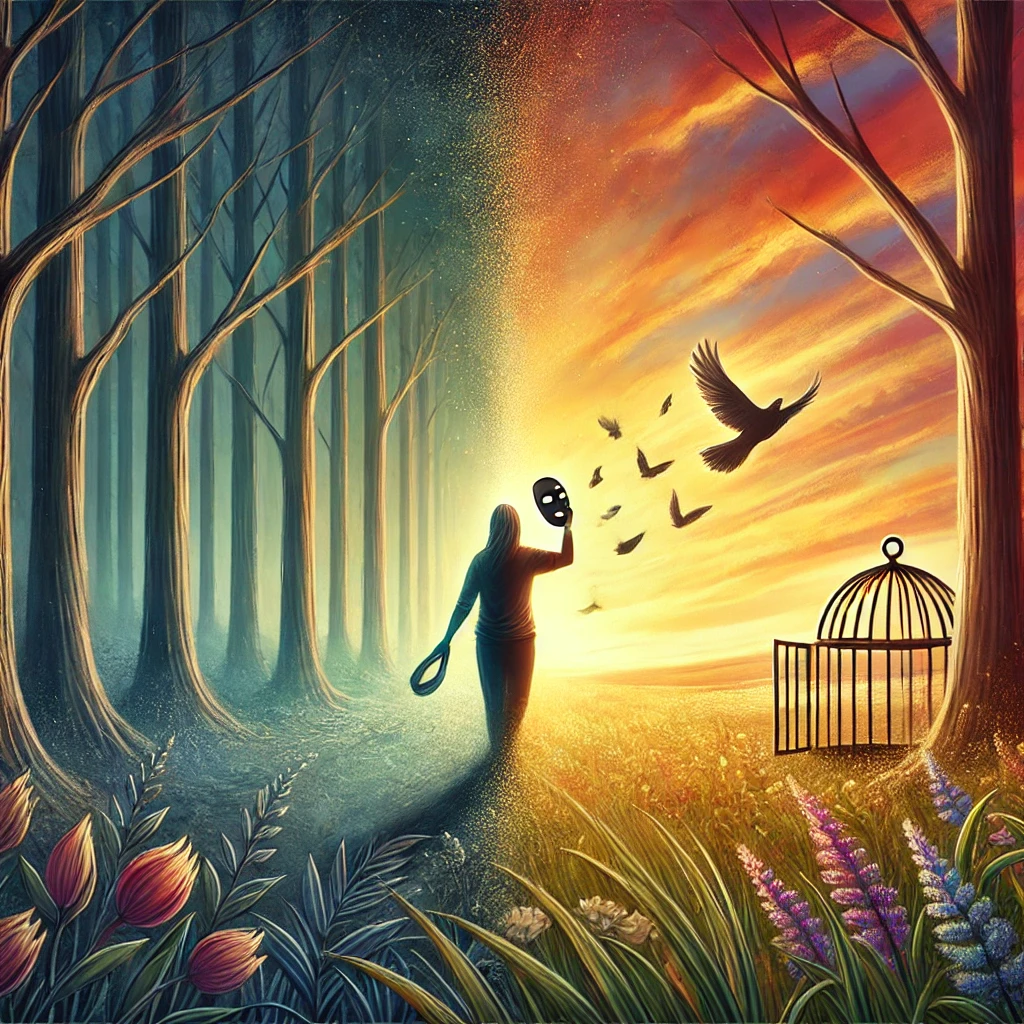
    Sometimes we keep secrets out of habit rather than necessity. Dr. Fedrick advises against putting yourself in situations where you have to keep harmful or malicious secrets from loved ones. It might be necessary to set boundaries with people whose secrets make you uncomfortable. It’s okay to tell a friend that you don’t want to be involved in certain conversations.

    If you find that secrets are affecting your well-being, consider talking to a mental health professional who can help you process your feelings. Journaling can also be a helpful outlet. And as long as your intention isn’t to hurt someone else, sharing a secret with a trusted person can relieve the burden. You don’t have to carry it alone.